
Water stains on wood furniture can be frustrating, especially when they appear on your favorite dining table, coffee table, or wooden cabinet. A forgotten glass, spilled drink, or damp object can leave behind cloudy white marks or dark discoloration that affects the wood’s appearance. Fortunately, many water stains can be improved or removed using gentle cleaning methods and proper wood care.
Learning how to remove water stains from wood starts with understanding the type of stain and the condition of the surface. White water rings usually affect the protective finish, while dark stains often indicate that moisture has reached deeper into the wood. This guide explains practical cleaning techniques, common mistakes to avoid, and ways to protect wooden furniture from future water damage.
Understand What Causes Water Stains on Wood
Water stains develop when moisture comes into contact with a wooden surface and affects its protective coating or natural fibers. Common causes include condensation from drinking glasses, accidental spills, wet towels, and flowerpots placed directly on furniture. Even small amounts of water can leave noticeable marks when moisture remains trapped against the surface for extended periods.
Wood is naturally porous, which means it can absorb moisture when its protective finish becomes damaged or worn. Water exposure may cause discoloration, swelling, or changes in the appearance of the surface. The severity of the damage depends on several factors, including the type of wood, the protective coating, and how long the moisture remains.
Some water marks develop quickly, while others become visible only after repeated exposure to moisture. Furniture placed in humid rooms may also develop problems when condensation accumulates regularly. Understanding these causes makes it easier to choose appropriate treatment methods and reduce the likelihood of additional damage to wooden surfaces.
Identify White and Dark Water Stains Before Cleaning
Before attempting water stain removal, examine the color and appearance of the affected area carefully. White or cloudy stains usually indicate moisture trapped within or beneath a clear protective finish. These marks are often easier to improve because the water may not have reached the underlying wood fibers.
Dark brown or black water stains generally suggest deeper moisture penetration, especially when the protective coating has been compromised. Water can react with natural compounds in certain woods or contribute to discoloration beneath the finish. These stains may require more involved restoration techniques rather than simple surface cleaning.
It is also important to distinguish water stains from heat damage, faded finishes, and ordinary surface dirt. A cloudy ring caused by a hot mug may involve heat as well as moisture, which can complicate treatment. Identifying the likely cause and finish type helps prevent unnecessary cleaning attempts that could make the problem worse.
Prepare Your Wooden Surface for Safe Stain Removal
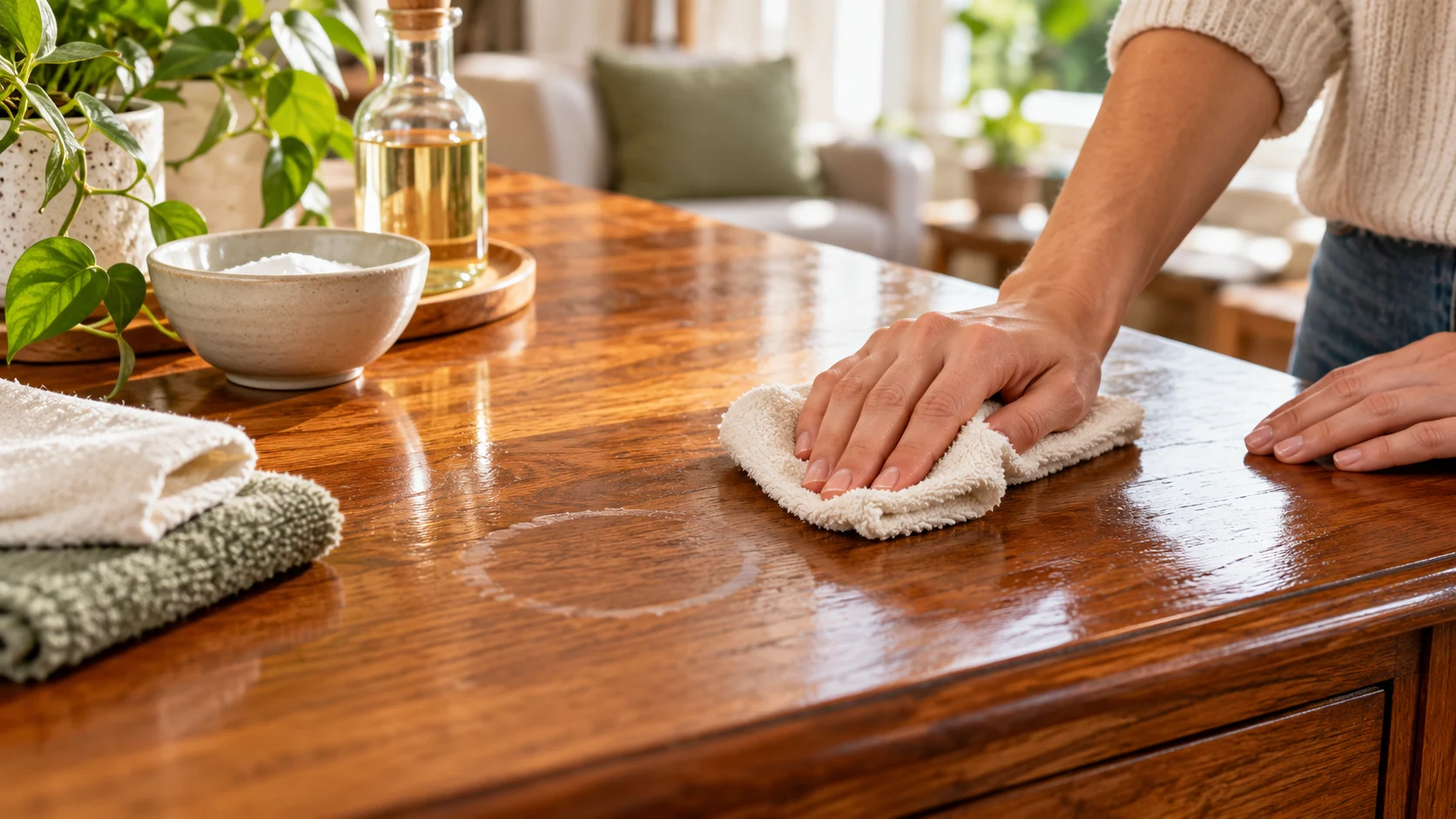
Proper preparation is important when learning how to clean water stains from wood without damaging the finish. Begin by removing decorative objects, tableware, and other items from the affected surface. Use a clean, soft microfiber cloth to gently remove dust and loose dirt before applying any cleaning method.
Next, inspect the wood for cracks, peeling varnish, loose veneer, or areas where the finish has already worn away. Damaged surfaces can absorb cleaning products unevenly, potentially making discoloration more noticeable. If the furniture is antique, valuable, or finished with an unfamiliar coating, professional advice is often safer than experimenting with household treatments.
Always test any cleaning or restoration method on a small, hidden section of the furniture first. Allow the test area to dry completely before checking for changes in color, texture, or shine. This simple precaution helps you understand how the finish responds and reduces the risk of visible damage.
Remove Fresh Water Marks With a Soft, Dry Cloth
Fresh water marks are often easier to address before moisture has time to penetrate the protective coating. If a spill occurs, gently blot the liquid using a clean, absorbent microfiber cloth. Avoid rubbing aggressively because friction may scratch delicate finishes or spread moisture across a larger area.
After removing the visible water, leave the surface uncovered so any remaining moisture can evaporate naturally. Maintain normal room ventilation and avoid placing damp objects back on the furniture. For recently developed cloudy marks, allowing the surface to dry thoroughly may improve the appearance without additional treatment.
Avoid using excessive heat to speed up drying, particularly on polished, veneered, or antique furniture. High temperatures can soften certain finishes, damage adhesives, or cause new discoloration. Gentle drying is usually a better first step than immediately applying household mixtures or attempting more aggressive restoration techniques.
Use Gentle Warm Air Carefully on White Water Rings
Some white water rings develop when moisture becomes trapped within a protective wood finish. In certain cases, gentle warmth may help the trapped moisture escape, improving the cloudy appearance. However, heat can also damage finishes, so this method should only be considered when the finish type is known and heat tolerance has been tested.
A hair dryer on its lowest cool or mildly warm setting may be suitable for limited testing on some modern, intact finishes. Keep it moving, maintain distance from the surface, and check frequently for changes. Stop immediately if the coating becomes tacky, develops an unusual shine, or shows any sign of damage.
This approach is not appropriate for every type of furniture, especially antiques, delicate lacquer finishes, or surfaces with loose veneer. Never use high heat, prolonged heating, or direct contact with a hot appliance. When the finish is uncertain, natural drying or professional assessment is the safer option.
Try a Small Amount of Petroleum Jelly for White Stains
Petroleum jelly is sometimes used as a household treatment for cloudy water rings on certain finished wooden surfaces. The idea is that an oily substance may temporarily change how light passes through a moisture-affected finish. Results vary considerably, and this method should not be treated as a guaranteed repair.
If the furniture manufacturer allows oil-based care products, test a tiny amount of plain petroleum jelly in an inconspicuous area. Check that the finish does not darken, soften, or develop an oily residue. Only consider applying it to the visible mark after confirming that the hidden test area remains unchanged.
Petroleum jelly can leave residue and may interfere with future refinishing, particularly on porous or damaged surfaces. Avoid using it on unfinished wood, antiques, or furniture with an unknown coating. If a white ring remains after gentle drying, consulting a furniture restoration specialist may be preferable to repeated household treatments.
Understand Why Baking Soda Can Damage Wood Finishes
Baking soda frequently appears in home cleaning advice as a solution for stubborn stains and surface marks. Although it works well for some household cleaning tasks, its mildly abrasive texture can damage delicate wood coatings. Scrubbing with baking soda may dull the finish, leave fine scratches, or make the affected area appear different from surrounding wood.
Mixing baking soda with water also introduces additional moisture to a surface that may already be vulnerable to water damage. This is particularly concerning for unfinished wood, worn coatings, and furniture with exposed joints. A homemade paste may therefore create new problems rather than remove the original water stain.
For most finished wooden furniture, a soft cloth and a manufacturer-approved cleaning product are safer starting points. Abrasive materials should be avoided unless a qualified professional specifically recommends them for the surface. Protecting the existing finish is often more important than attempting to remove a mark as quickly as possible.
Avoid Toothpaste and Harsh Household Cleaning Products
Toothpaste is another popular home remedy sometimes suggested for removing water rings from wooden tables. However, many toothpastes contain abrasives, whitening ingredients, and additives that are not designed for furniture finishes. Rubbing these products onto wood may leave scratches, remove gloss, or damage a delicate protective coating.
Strong household cleaners can also cause problems when used on polished or varnished wood. Products containing harsh solvents, bleach, or ammonia may interact with finishes and contribute to discoloration or deterioration. Applying several cleaners in succession can make the original stain harder to assess and complicate later restoration.
A better approach is to identify the wood finish and select products specifically approved for that surface. Use small amounts, follow label instructions, and avoid saturating the area. When simple cleaning does not improve the stain, additional scrubbing is unlikely to solve damage that lies beneath the protective finish.
Remove Dark Water Stains From Wooden Furniture
Dark water stains are generally more challenging because moisture may have penetrated below the finish and into the wood itself. These marks can develop after prolonged exposure to water or when moisture reaches damaged areas of furniture. Simple wiping, polishing, or surface cleaning usually cannot remove discoloration that has developed within the wood fibers.
Effective treatment may require removing the existing finish, addressing the stained wood, and applying a compatible protective coating. This process can involve specialized restoration products and careful color matching. Because different woods react differently to moisture and chemical treatments, the correct approach depends on the furniture’s material and construction.
Deep stains on valuable, veneered, or antique furniture are best assessed by a professional restorer. Attempting to remove dark discoloration through aggressive sanding can permanently damage thin veneers and decorative surfaces. Professional evaluation can determine whether the mark is treatable and which repair method is least likely to affect the furniture’s appearance.
Know When Sanding and Refinishing Are Necessary
Sanding and refinishing may be necessary when water stains have damaged an existing coating or penetrated deeply into solid wood. Unlike surface cleaning, refinishing addresses the protective layer and, when appropriate, the underlying material. It can improve the appearance of furniture with widespread discoloration, scratches, or a deteriorating finish.
However, not every wooden surface is suitable for sanding, especially furniture made with thin veneer or engineered wood. Removing too much material can expose underlying layers and permanently change the surface. The original stain or coating must also be identified to determine whether a compatible new finish can be applied.
For extensive water damage, professional refinishing is often safer than trying to restore the entire surface without experience. A furniture specialist can evaluate whether localized repair, complete refinishing, or replacement is appropriate. This assessment helps preserve the wood’s character while avoiding unnecessary removal of its original material.
Clean Water Stains From Wooden Tables and Desks
Dining tables, coffee tables, and wooden desks frequently develop water marks because they are used for drinks, meals, and everyday activities. The most common marks appear beneath cups, vases, and containers that collect condensation. Addressing spills promptly can reduce the chance of moisture reaching the finish or underlying wood.
For routine cleaning, use a soft, slightly damp cloth only when the manufacturer’s care instructions allow it. Follow immediately with a dry microfiber cloth so moisture does not remain on the surface. Avoid leaving wet cleaning cloths, damp dishes, or decorative objects directly on the wood after cleaning.
If a water ring remains visible, identify whether it is cloudy white or dark before choosing a treatment. Do not assume that the same method will work on every table or desk. A modern polyurethane-coated tabletop may respond differently from an older polished surface, making finish identification essential for safe care.
Remove Water Stains From Hardwood Floors Safely
Hardwood floors can develop water stains from spilled drinks, plant containers, pet-related accidents, or unnoticed moisture near doors and windows. The appearance of the stain often depends on whether water has affected only the protective coating or reached the wood beneath. Discoloration accompanied by raised boards or cupping may indicate more extensive moisture damage.
Begin by identifying and stopping the source of water, then dry the affected area promptly using suitable absorbent materials. Maintain appropriate indoor ventilation and avoid introducing additional moisture through excessive mopping. If the floor remains damp beneath the surface, professional moisture assessment may be necessary before cosmetic repairs begin.
Dark stains, swollen boards, or persistent discoloration may require specialized floor restoration rather than ordinary cleaning. Avoid sanding isolated spots without considering how the repaired area will match the surrounding finish. A qualified flooring professional can recommend localized repairs or refinishing based on the wood species, floor construction, and extent of damage.
Protect Wooden Furniture From Future Water Stains
Preventing water stains is usually easier than repairing damage after moisture has penetrated the wood. Coasters, placemats, and protective pads help separate drinking glasses, hot containers, and damp objects from finished surfaces. These simple accessories are especially useful for frequently used dining tables, coffee tables, and desks.
Flowerpots and decorative containers should have protective trays that prevent moisture from collecting against furniture. Check beneath vases and planters regularly because trapped water can remain unnoticed for long periods. Wiping spills immediately and allowing surfaces to dry properly can also reduce the risk of discoloration and damage to protective coatings.
Maintaining the furniture’s existing finish is another important part of long-term wood care. Follow manufacturer recommendations for cleaning, conditioning, or applying compatible protective products. Avoid unnecessary moisture exposure and monitor areas where protective coatings appear cracked, worn, or damaged.
Maintain the Natural Beauty of Wooden Surfaces
Regular furniture maintenance can help preserve the appearance and condition of wooden surfaces over time. Dusting with a soft microfiber cloth removes loose particles that might otherwise scratch finishes during cleaning. Using appropriate cleaning products also helps maintain the surface without introducing harsh ingredients that could affect its protective coating.
Indoor environmental conditions influence how wooden furniture responds to moisture and temperature changes. Significant fluctuations in humidity may contribute to expansion, contraction, and other changes in wood. Maintaining a reasonably stable indoor environment can support the long-term condition of furniture, flooring, and other wooden household items.
Periodic inspections can reveal early signs of water damage, including cloudy marks, peeling coatings, dark discoloration, and raised grain. Addressing these problems promptly may prevent further deterioration and reduce the need for extensive repairs. Careful handling, suitable protective accessories, and consistent maintenance help wooden surfaces retain their natural character for years.
Conclusion
Learning how to remove water stains from wood begins with identifying the type of discoloration and understanding the condition of the surface. White water rings often affect protective finishes, while dark stains may indicate deeper moisture penetration. Choosing a gentle treatment suited to the wood and its coating is important for avoiding additional damage.
Simple steps such as promptly drying spills, using soft cloths, and allowing trapped moisture to evaporate may improve some superficial stains. More stubborn marks may require specialized restoration techniques or professional attention. Avoiding harsh cleaners, excessive heat, and abrasive household remedies helps protect wooden furniture from unnecessary wear.
Preventive care remains one of the most effective ways to keep wooden surfaces looking attractive. Coasters, protective pads, careful cleaning, and proper indoor conditions can reduce the likelihood of future water marks. With the right approach, many wooden tables, floors, and furniture pieces can maintain their beauty and durability for years.
FAQs
How do you remove white water stains from wood?
White water stains may improve after gentle drying because moisture is sometimes trapped in the protective finish. Use a soft cloth, allow natural evaporation, and avoid harsh cleaning products or excessive heat.
Can old water stains be removed from wooden furniture?
Some older stains can be improved, depending on their depth and the condition of the wood finish. Deep discoloration may require professional restoration, refinishing, or specialized treatment rather than ordinary household cleaning.
Does baking soda remove water stains from wood?
Baking soda is sometimes suggested for water stains, but its abrasive texture may scratch or dull wooden finishes. A gentle cleaning method recommended for the specific finish is generally a safer choice.
How do you remove dark water stains from wood?
Dark water stains often indicate moisture penetration beneath the protective finish. Removing them may require professional refinishing or specialized restoration techniques, particularly when working with valuable furniture or thin wooden veneers.
How can you prevent water stains on wooden tables?
Use coasters, placemats, and protective trays beneath drinks, plants, and decorative containers. Clean spills immediately, avoid leaving damp objects on furniture, and maintain the protective finish according to manufacturer recommendations.


[…] […]