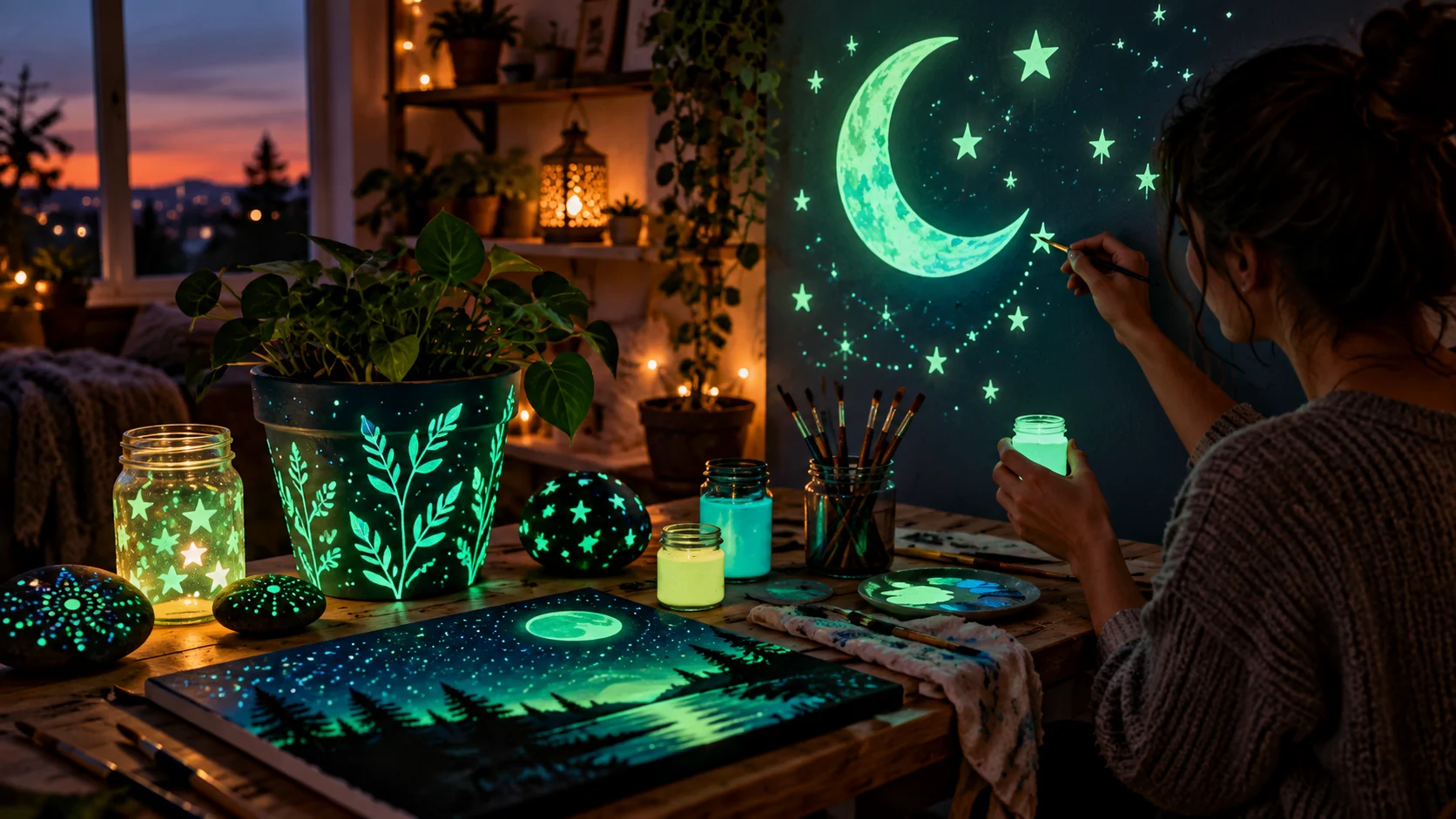
Glow in the dark paint is a creative and versatile material that can transform ordinary surfaces into eye-catching designs. Whether you want to decorate a bedroom, create unique artwork, or add glowing details to home accessories, this special paint offers exciting possibilities. It absorbs light and releases a visible glow in dark surroundings, making it popular for decorative projects, crafts, and selected practical applications.
Unlike ordinary paint, glow in the dark paint contains special pigments that store energy from light exposure and gradually release it. Depending on the product, the glowing effect may remain visible for several hours after charging. Different formulations are available for walls, wood, plastic, fabric, and other materials, although suitability varies by manufacturer.
In this guide, you will learn how glow in the dark paint works, its different types, popular uses, application techniques, and maintenance tips. We will also discuss surface preparation, drying times, safety considerations, and common mistakes to avoid when working with luminous paint.
What Is Glow in the Dark Paint?
Glow in the dark paint is a specialized coating that produces visible light after being exposed to an appropriate light source. Most modern products use phosphorescent pigments that absorb energy and release it gradually in darker environments. This process creates the glowing appearance associated with luminous wall art, decorations, and craft projects. The effect does not normally require batteries or electrical connections.
The brightness and duration of the glow depend on the pigment, paint formulation, application thickness, and amount of light absorbed. Some products create a soft glow suitable for decorative details, while others provide a stronger visual effect. Colors can also differ between ordinary lighting and darkness. Understanding these differences helps homeowners and artists choose suitable products.
Glow in the dark paint is available in water-based, acrylic, and other specialized formulations. Some products are intended for indoor crafts, while others are designed for outdoor or industrial applications. Always confirm that the selected paint is compatible with the intended surface. Following the manufacturer’s recommendations helps achieve reliable results and prevents unnecessary coating problems.
How Does Glow in the Dark Paint Work?
Glow in the dark paint works through a process called phosphorescence, which allows certain materials to store energy from absorbed light. When exposed to sunlight or suitable artificial lighting, the pigments become energized. After the surrounding light decreases, the stored energy is released gradually as visible light. This creates the familiar glow seen on painted objects.
Modern phosphorescent paints often contain pigments based on strontium aluminate. These materials can provide relatively bright and long-lasting afterglow compared with many older pigment formulations. Their performance depends on the specific product and charging conditions. The glow normally becomes weaker over time as the stored energy is released.
Glow paint should not be confused with fluorescent paint, which typically appears especially bright under ultraviolet lighting but does not necessarily continue glowing when the light source is removed. Phosphorescent paint produces an afterglow because of stored energy. This distinction matters when choosing materials for decorations. Understanding the technology helps explain why lighting conditions strongly influence the final result.
Different Types of Glow in the Dark Paint
Water-based glow in the dark paint is a popular choice for indoor crafts and decorative projects. These products are often easy to apply with brushes or rollers and may have relatively low odor compared with solvent-based alternatives. Water-based formulations can be suitable for walls, wood, and certain prepared surfaces. However, product compatibility should always be checked before application.
Acrylic glow paint is another commonly available option, particularly for artwork and craft projects. It can be used on various prepared materials depending on the formulation. Acrylic paints are available in different colors, finishes, and pigment concentrations. Some products are intended for general crafts, while others require additional protective coatings for long-term durability.
Specialized luminous coatings are also available for outdoor surfaces, industrial markings, and certain decorative applications. These products may offer improved weather resistance or adhesion to specific materials. Their performance and safety requirements differ from those of ordinary craft paint. Selecting the appropriate formulation is important because no single glow paint works equally well on every surface.
Popular Uses of Glow in the Dark Paint at Home
Glow in the dark paint offers many creative possibilities for decorating bedrooms, living spaces, and home accessories. One popular application involves painting stars, moons, or constellation patterns on ceilings. These designs can create an attractive nighttime atmosphere after the room lights are switched off. Children’s rooms, hobby spaces, and themed bedrooms are common locations for these projects.
Furniture and decorative accessories can also benefit from carefully applied glowing accents. Small details on picture frames, decorative boxes, or wall ornaments may become more noticeable in darkness. Glow paint can be used to highlight selected design elements without changing the appearance of an entire room. Simple patterns often create a more balanced effect than covering every available surface.
Homeowners may also use compatible glow paint on decorative signs or selected noncritical household markings. However, ordinary craft paint should not replace approved emergency lighting or safety signage. Decorative products may fade too quickly or perform inconsistently for essential visibility. Use certified materials whenever visibility is important for safety or regulatory compliance.
Glow in the Dark Paint for Walls and Ceilings
Walls and ceilings are popular surfaces for glow in the dark paint because they provide large areas for creative designs. Before painting, make sure the surface is clean, dry, and free from loose material. Smooth surfaces generally produce more consistent results than rough or damaged walls. Proper preparation improves adhesion and helps the glowing pattern appear more uniform.
A light-colored base coat can improve the visible brightness of certain translucent glow paints. White backgrounds are particularly useful because they reflect more visible light than dark surfaces. However, some products are designed for specific base colors or finishes. Always follow the manufacturer’s recommendations rather than assuming every luminous coating requires the same preparation.
When creating ceiling designs, use appropriate painting tools and work in manageable sections. Small stars, geometric shapes, and artistic patterns can be applied using brushes or suitable stencils. Allow each layer to dry according to the product instructions before adding another. Testing the glow after charging helps identify areas that may benefit from additional coating.
Creative Glow in the Dark Paint Ideas for Crafts
Craft projects are among the easiest ways to experiment with glow in the dark paint without making permanent changes to your home. Decorative stones, wooden signs, picture frames, and handmade ornaments can become attractive glowing accessories. Small projects also allow beginners to practice application techniques. Starting with inexpensive materials helps you understand how different paint layers affect the final appearance.
Glow paint can create interesting effects on artwork by highlighting selected shapes or details. For example, an artist might add luminous stars to a landscape painting or create glowing outlines around a decorative design. The artwork may appear different under normal lighting and in darkness. These contrasting appearances make luminous painting particularly appealing for creative projects.
Seasonal decorations, personalized gifts, and themed party accessories are other possible applications. Use surfaces and products that are suitable for the intended environment and avoid painting objects that may contact food. Painted items intended for young children should meet relevant product safety requirements. Choosing appropriate materials makes craft projects more enjoyable and practical.
How to Apply Glow in the Dark Paint Correctly
Successful application begins with reading the product instructions and preparing the intended surface. Remove dust, grease, moisture, and loose paint before starting. Some materials require sanding or a compatible primer to improve adhesion. Testing the product on a small hidden area can help identify unexpected color changes or compatibility problems.
Stir the paint thoroughly according to the manufacturer’s directions because luminous pigments may settle during storage. Apply an even coat using an appropriate brush, roller, or other recommended tool. Avoid adding excessive amounts of paint at once because thick, uneven layers may dry poorly. Several properly dried coats often create a more consistent appearance.
Allow the coating to dry for the recommended period before handling or exposing it to demanding conditions. Some products require additional curing time before reaching their intended durability. Once dry, expose the painted surface to suitable light and observe the glow in a dark environment. If brightness is uneven, inspect the coating before deciding whether another layer is necessary.
Best Surfaces for Glow in the Dark Paint
Glow in the dark paint can be applied to many surfaces, but adhesion and durability vary according to the formulation. Prepared wood is often suitable for decorative crafts because it provides a relatively stable painting surface. Smooth walls and primed canvases can also work well with compatible products. Surface preparation remains essential for producing a reliable finish.
Plastic, metal, glass, and ceramic surfaces may require specialized primers or paints designed for those materials. Ordinary craft paint can peel or scratch easily when applied to slick, nonporous surfaces without proper preparation. Manufacturers may specify suitable primers or surface treatments. Following these requirements can improve coating adhesion and reduce premature wear.
Fabric applications require additional consideration because clothing and textiles bend, stretch, and undergo cleaning. Only use luminous paints specifically labeled for fabric when decorating washable materials. Some formulations require heat setting or particular care instructions. Avoid assuming a paint suitable for walls will remain flexible or durable on clothing.
How to Make Glow in the Dark Paint Brighter
The brightness of glow in the dark paint depends heavily on the amount of light absorbed before entering a dark environment. Strong, suitable illumination generally helps activate phosphorescent pigments more effectively. Sunlight and certain artificial lights can provide the necessary energy. However, the required charging time varies between products and lighting conditions.
The color and condition of the underlying surface can also influence the visible glowing effect. Light-colored backgrounds often help certain luminous paints appear brighter than dark backgrounds. Even application and adequate pigment coverage are important as well. Thin or inconsistent coatings may produce weak or uneven results after charging.
Choosing quality paint with an appropriate pigment concentration can make a noticeable difference. Some products are designed for subtle decorative effects, while others prioritize stronger afterglow performance. Compare manufacturer specifications and realistic performance claims before purchasing. Applying the paint correctly is usually more effective than relying on improvised additives.
How Long Does Glow in the Dark Paint Last?
Glow in the dark paint has two different types of longevity: the duration of its visible afterglow and the lifespan of the coating itself. After charging, some products remain visibly luminous for several hours under suitable conditions. The strongest glow generally occurs soon after the light source is removed. Brightness gradually decreases as stored energy is released.
The actual afterglow depends on pigment quality, charging intensity, surrounding darkness, and human visual sensitivity. A surface may appear bright immediately after charging but become much fainter later. Manufacturer estimates may reflect particular testing conditions. Real-world results can therefore differ from advertised maximum glow durations.
The painted coating may remain functional for years when properly applied and maintained, although performance depends on the formulation and environment. Sunlight exposure, moisture, abrasion, and surface damage can affect long-term durability. Some products require protective coatings for certain uses. Following recommended care procedures helps preserve both appearance and function.
Is Glow in the Dark Paint Safe to Use?
Most consumer glow in the dark paints use nonradioactive phosphorescent pigments, but product safety depends on the complete formulation. Paints may contain binders, solvents, preservatives, or additives requiring specific precautions. Check the label for intended uses, warnings, and ventilation requirements. Products suitable for ordinary crafts should not automatically be considered safe for skin or food-contact surfaces.
When painting indoors, maintain appropriate ventilation and avoid unnecessary exposure to vapors or airborne particles. Do not sand dried coatings without considering dust protection and the manufacturer’s safety recommendations. Keep paint containers closed when not in use and store them securely. Children should use age-appropriate craft products with suitable adult supervision.
Glow paint should never be treated as a replacement for approved safety equipment or emergency systems unless the product is specifically certified for that purpose. Ordinary decorative coatings may not provide reliable visibility during emergencies. Avoid applying paint to surfaces where it could create slipping or visibility hazards. Using products within their intended applications supports safer results.
Glow in the Dark Paint vs. Fluorescent Paint
Glow in the dark paint and fluorescent paint are often confused because both can create bright visual effects. However, they work differently under changing lighting conditions. Phosphorescent glow paint stores energy and releases visible light after the charging source is removed. Fluorescent paint generally requires an active light source to maintain its distinctive brightness.
Fluorescent colors may appear particularly vivid under ultraviolet or appropriate visible lighting. These paints are popular for decorative artwork, signs, and colorful displays. Once the illuminating source is switched off, ordinary fluorescent paint does not continue producing a substantial afterglow. This makes it different from products designed specifically for phosphorescent performance.
Some decorative products combine fluorescent and phosphorescent properties, allowing them to appear vibrant under certain lighting conditions and glow afterward. Their behavior depends on the pigments and materials used. Reading product descriptions carefully helps avoid purchasing the wrong type. Choose phosphorescent paint when an afterglow without continuous illumination is the desired effect.
Common Glow in the Dark Paint Mistakes to Avoid
One common mistake is expecting strong illumination after exposing the paint to insufficient light. Phosphorescent pigments need appropriate charging conditions to produce a noticeable afterglow. A dim room may not supply enough energy for the desired result. Testing the coating under suitable lighting can help determine whether weak brightness results from insufficient charging.
Another mistake is applying luminous paint directly to dirty, glossy, or incompatible surfaces. Poor preparation can cause uneven coverage, peeling, and reduced durability. Applying excessively thick layers may also produce inconsistent drying and surface defects. Proper cleaning, suitable primers, and careful application are often more important than attempting to finish the project quickly.
Some people also expect glow paint to remain equally bright throughout the night. In reality, the afterglow normally becomes weaker over time. Choosing an unsuitable paint for outdoor exposure or frequently handled objects can create additional problems. Understanding product limitations before beginning helps establish realistic expectations and reduces wasted materials.
How Much Does Glow in the Dark Paint Cost?
Glow in the dark paint prices vary according to container size, pigment quality, brand, and intended application. Small craft paint bottles may cost only a few dollars, while larger quantities and specialized coatings can be considerably more expensive. Premium luminous paints may contain higher concentrations of phosphorescent pigment. These differences influence both appearance and cost.
A small decorative project usually requires less material than painting a large wall or ceiling. Before purchasing, estimate the surface area and review the product’s stated coverage rate. Multiple coats may be necessary depending on the formulation and desired effect. Including primer, brushes, and protective finishes in the budget helps avoid unexpected expenses.
The cheapest paint is not always the most economical option if it requires many additional coats or produces unsatisfactory results. Compare product suitability, coverage, and performance instead of focusing exclusively on container price. Buying a small sample can be useful before beginning a larger project. Careful planning helps control costs while achieving a reliable finish.
How to Clean and Maintain Glow in the Dark Paint
Proper maintenance helps preserve the appearance and durability of painted surfaces. For indoor decorative items, gentle dusting or cleaning with a soft cloth may be sufficient. Avoid harsh scrubbing that could damage the coating. Always follow the product’s cleaning recommendations because some paints are more sensitive to moisture than others.
Outdoor luminous coatings may experience greater wear because of sunlight, rain, temperature changes, and environmental dirt. Periodically inspect painted surfaces for fading, peeling, or damaged protective layers. Certain products may require a compatible clear coating to improve durability. However, not every clear finish is suitable, and some may affect luminous performance.
If a painted area becomes damaged, clean the surface and follow the manufacturer’s repair recommendations before applying another coat. Avoid painting over loose material because adhesion problems may continue. Regular inspections can identify small issues before they spread. Appropriate maintenance allows decorative glow paint projects to remain attractive for longer periods.
Conclusion
Glow in the dark paint is a versatile decorative material that can transform ordinary surfaces into visually interesting designs. Its phosphorescent pigments absorb energy from suitable lighting and release a visible afterglow in darker conditions. From ceiling decorations and wall artwork to crafts and home accessories, there are many creative ways to use luminous paint.
Successful results depend on selecting the right product, preparing surfaces carefully, and applying the coating according to manufacturer instructions. Light exposure, pigment quality, base color, and coating thickness can all influence the glowing effect. Understanding these factors helps create more consistent results and prevents common application mistakes.
Whether you are decorating a room or experimenting with a small creative project, glow in the dark paint offers an enjoyable way to add distinctive visual details. Prioritize product compatibility, safe application, and realistic performance expectations. With thoughtful preparation and proper maintenance, luminous paint can create attractive effects that remain enjoyable long after the lights go out.
Frequently Asked Questions
How Long Does Glow in the Dark Paint Glow?
The visible afterglow may last several hours depending on pigment quality, charging conditions, and the surrounding darkness. Brightness normally decreases gradually, so the strongest effect occurs shortly after illumination ends.
Does Glow in the Dark Paint Need Sunlight to Work?
No, glow in the dark paint does not always require sunlight. Suitable artificial lighting can also charge phosphorescent pigments, although brightness and charging time depend on the light source and product formulation.
Can Glow in the Dark Paint Be Used Outdoors?
Yes, some glow in the dark paints are designed for outdoor applications. Choose a weather-resistant product suitable for the surface and follow manufacturer instructions regarding primers and protective coatings.
What Is the Best Base Color for Glow in the Dark Paint?
White or other light-colored bases often improve the visible brightness of translucent glow paints. However, the ideal base color depends on the specific product and the appearance you want to achieve.
Is Glow in the Dark Paint Permanent?
Glow in the dark paint can remain functional for years when properly applied and maintained, but it is not completely permanent. Weather exposure, abrasion, and coating damage can affect its appearance and performance.