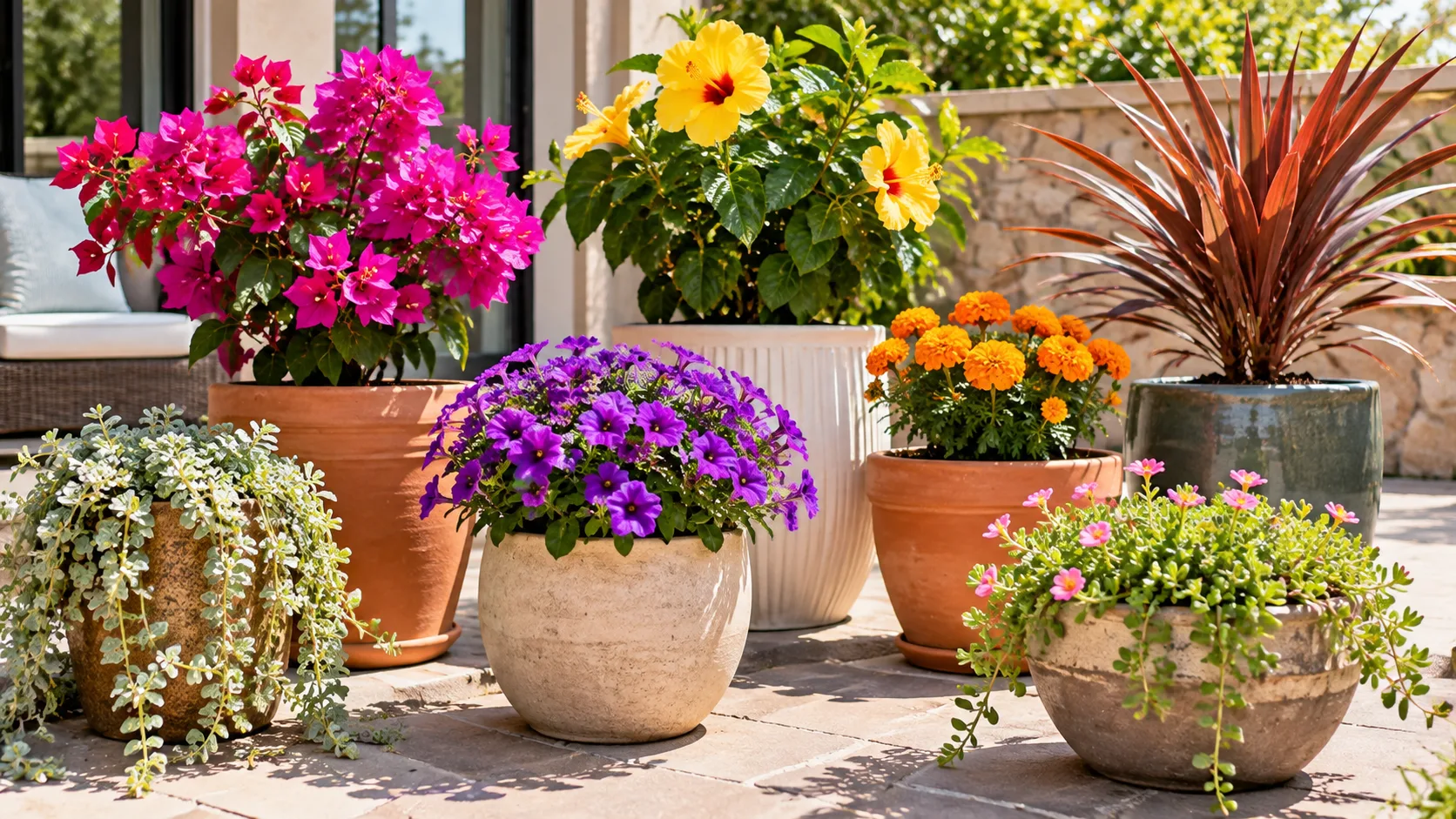
Growing plants in sunny outdoor spaces can make patios, balconies, gardens, and entrances more colorful and inviting. However, not every plant can tolerate strong sunlight, especially when grown in containers. Pots can heat up quickly, and soil may dry faster than it does in garden beds. Choosing the best plants for outdoor pots in full sun helps create a beautiful container garden that can handle bright conditions.
Fortunately, many flowers, herbs, ornamental grasses, and succulents thrive in sunny locations when given suitable care. From colorful petunias and cheerful marigolds to fragrant lavender and drought-tolerant sedum, there are options for different climates and gardening preferences.
What Makes a Plant Suitable for Full-Sun Outdoor Pots?
Full sun generally means a location receives at least six hours of direct sunlight daily. However, sunlight intensity varies according to climate, season, and time of day. A plant that grows well in mild morning sunshine may struggle with intense afternoon heat. Understanding these differences helps you choose suitable outdoor container plants.
Plants suited to sunny containers often have characteristics that help them manage heat and moisture loss. Some have thick leaves that store water, while others develop root systems suited to periodic dry conditions. Certain flowering plants continue blooming during warm weather. However, even drought-tolerant varieties need adequate water while establishing themselves.
Container growing also places different demands on plants compared with garden beds. Limited soil volume affects moisture retention, root development, and nutrient availability. Pots exposed to direct sunlight may become particularly warm during summer. Selecting suitable plants, containers, and potting mixes helps reduce these challenges and supports healthy growth.
Petunias: Colorful Flowers for Sunny Containers
Petunias are popular flowering plants for sunny pots because they produce attractive blooms in many colors. Pink, purple, white, red, and multicolored varieties can brighten patios, balconies, and garden entrances. They generally perform best with plenty of direct sunlight. Their spreading growth makes them especially useful for decorative containers and hanging baskets.
When planting petunias, choose containers with drainage holes and a suitable potting mix. The soil should remain reasonably moist without becoming waterlogged. Regular watering may be necessary during hot weather, particularly in small pots. However, watering requirements depend on temperature, rainfall, and container size.
Petunias can benefit from occasional feeding with a fertilizer suitable for flowering container plants. Some varieties also respond well to removing faded flowers, although many modern types are self-cleaning. Check plants regularly for insects or damaged growth. With appropriate care, petunias can provide colorful displays throughout much of the growing season.
Geraniums: Reliable Flowers for Bright Outdoor Spaces
Geraniums, commonly sold as Pelargoniums, are attractive choices for sunny outdoor containers. They produce clusters of colorful flowers above decorative foliage. Many varieties perform well in bright conditions and tolerate some dry periods once established. Their upright or trailing growth habits make them suitable for different pot arrangements.
Plant geraniums in containers with effective drainage and use a well-draining potting mix. Allowing the upper layer of soil to dry slightly between watering sessions can help prevent excessive moisture. However, plants should not be left severely dehydrated. Their watering needs increase during prolonged heat.
Removing spent flower clusters can encourage a tidy appearance and continued blooming in many varieties. Geraniums also benefit from suitable feeding during active growth. In climates with freezing winters, they may need protection or indoor storage. Their adaptability and colorful flowers make them useful for sunny patios and entrances.
Marigolds: Easy-to-Grow Plants for Full Sun
Marigolds are excellent options for gardeners who want bright flowers without complicated maintenance. Their cheerful yellow, orange, and golden blooms complement many outdoor decorating styles. Most common garden marigolds grow well in sunny locations. They are frequently planted in containers, borders, and small garden spaces.
Choose a pot that provides enough room for the mature plant. Smaller French marigolds often work well in compact containers, while larger African marigolds may require additional space. Use a suitable potting mix and ensure excess water can drain freely. Consistent moisture supports healthy growth, especially during establishment.
Deadheading faded blooms may help encourage additional flowering and maintain a neat appearance. Marigolds can tolerate warm conditions, but extreme heat may reduce flowering in some varieties. Inspect the soil regularly rather than watering on a rigid schedule. These plants provide an approachable starting point for sunny container gardening.
Zinnias: Bright Summer Flowers for Outdoor Pots
Zinnias are colorful annual flowers that grow well in sunny outdoor locations. They produce blooms in shades of pink, orange, red, yellow, purple, and white. Their upright growth creates striking displays in patio containers. Compact varieties are particularly convenient for gardeners working with limited space.
Zinnias generally prefer well-drained soil and good air circulation. Choose a container large enough to accommodate the roots without overcrowding neighboring plants. Water near the soil surface when possible to avoid unnecessarily wetting the leaves. This approach may help reduce some moisture-related leaf problems.
Many zinnias continue flowering throughout warm growing seasons when conditions are suitable. Removing faded blooms can encourage additional flowers in some varieties. Regularly inspect plants for powdery mildew or other signs of stress. Their vibrant appearance makes zinnias a useful choice for colorful summer container arrangements.
Lantana: Heat-Tolerant Flowers for Sunny Patios
Lantana is known for its clusters of small, colorful flowers and ability to tolerate hot conditions. Many varieties grow well in full sunlight and attract visiting butterflies. Its flowers can display combinations of yellow, orange, pink, red, and purple. Compact varieties are particularly suitable for outdoor containers.
Lantana grows best in well-draining soil and generally prefers not to remain constantly wet. Newly planted specimens need regular watering until their roots become established. Established plants may tolerate occasional dry conditions, depending on climate and pot size. Strong afternoon heat can still increase moisture requirements.
Before planting lantana, check whether it is invasive or restricted in your region. Some types spread aggressively in warm climates, and parts of the plant are toxic if eaten by people or pets. Choose suitable varieties and keep containers away from curious animals or young children. Regional guidance is especially important for this plant.
Lavender: Fragrant Plants for Sunny Containers
Lavender is a popular choice for gardeners who enjoy fragrant foliage and purple flower spikes. Many varieties grow best in sunny locations with excellent drainage. Their silvery-green leaves create an attractive appearance even when flowers are not present. Lavender can work well in decorative pots near seating areas or garden paths.
Use a free-draining potting mix and avoid containers that retain excessive moisture. Lavender roots can suffer when soil remains waterlogged for extended periods. Allow the mix to dry appropriately between waterings, depending on the variety and climate. Containers should always include suitable drainage holes.
Lavender also benefits from occasional pruning to maintain a compact shape. However, avoid cutting deeply into old woody stems unless the specific variety tolerates it. Some lavender types struggle in extremely humid conditions or intense tropical heat. Choosing a variety suited to your local climate improves the chances of success.
Portulaca: Drought-Tolerant Flowers for Hot Weather
Portulaca, also called moss rose, is an attractive flowering plant for hot and sunny containers. Its fleshy leaves help store moisture, making it relatively tolerant of dry conditions. The plant produces colorful flowers in shades of yellow, pink, orange, red, and white. Its low-growing habit suits shallow containers and hanging baskets.
Portulaca performs best in well-draining soil and plenty of direct sunlight. Avoid keeping the soil constantly wet because excessive moisture can damage the roots. Although established plants tolerate some dryness, newly planted specimens still require appropriate watering. Small containers may need more frequent checks during extreme heat.
This plant is especially useful for gardeners who want colorful flowers in exposed locations. Its spreading growth can soften the edges of decorative pots. However, flowering may decline during cloudy weather or unsuitable conditions. Selecting a sunny location helps encourage the bright blooms that make portulaca popular.
Succulents and Sedum: Low-Maintenance Sun-Loving Plants
Succulents are popular container plants because many species store water in their leaves, stems, or roots. Sedum varieties are particularly useful for sunny outdoor arrangements. Their foliage comes in different shapes, textures, and colors. Some varieties also produce attractive seasonal flowers.
Use containers with drainage holes and a potting mix formulated for succulents or other well-draining conditions. Water thoroughly when appropriate, then allow the growing medium to dry according to the plant’s needs. Avoid assuming every succulent tolerates identical conditions. Different species have different requirements.
Some succulents thrive in strong direct sunlight, while others can develop leaf damage during extreme afternoon heat. Plants moved outdoors from shaded conditions should be introduced to stronger sunlight gradually. Check local temperatures before choosing varieties. Cold tolerance also varies considerably, especially during winter.
Rosemary: An Attractive Herb for Full-Sun Pots
Rosemary is a fragrant culinary herb that can also serve as an ornamental container plant. Its narrow evergreen leaves and upright or trailing growth habits add texture to sunny outdoor spaces. Rosemary generally prefers full sun and well-drained soil. It works particularly well in herb gardens near patios or kitchens.
Choose a container that accommodates the roots and allows excess moisture to escape. Rosemary often performs poorly when its growing medium remains saturated. Check the soil before watering and adjust according to weather conditions. Established plants may tolerate short dry periods, but container-grown herbs still need attention.
Light harvesting can help maintain a manageable shape while providing leaves for cooking. Avoid removing excessive growth at one time, particularly from young plants. Rosemary may require winter protection in colder regions. With suitable care, it can provide attractive foliage and useful culinary leaves throughout the year.
Ornamental Grasses for Sunny Outdoor Containers
Ornamental grasses can add height, movement, and texture to outdoor pots. Many varieties produce graceful leaves that move naturally in the wind. Their appearance complements colorful flowers and modern container designs. However, sunlight requirements vary, so choosing a grass suited to full sun is important.
Compact varieties of fountain grass and blue fescue are sometimes grown in containers. Their mature size should be considered before planting. Large grasses may eventually require substantial pots or division. Select containers that remain stable in windy conditions and provide appropriate drainage.
Some ornamental grasses tolerate heat and occasional dry weather once established. Others require more consistent moisture, especially during their first growing season. Check whether the chosen species is invasive in your area before purchasing. Suitable grasses can provide attractive structure even when neighboring flowers are not blooming.
How to Choose the Right Pots for Full-Sun Plants
Selecting the correct container is just as important as choosing suitable plants. Outdoor pots should provide enough space for roots and include effective drainage. Materials such as terracotta, ceramic, plastic, and metal behave differently in direct sunlight. Their weight, heat retention, and moisture characteristics influence plant care.
Terracotta containers allow moisture to evaporate through their porous surfaces. This can benefit plants that prefer drier soil but may increase watering requirements. Plastic containers often retain moisture longer, while metal pots can become very hot in direct sunlight. Consider the plant’s needs before choosing a material.
Pot size also affects plant growth and maintenance. Small containers dry quickly, while oversized pots containing moisture-retentive soil may remain wet for too long. Choose dimensions suited to the plant’s expected root development. A stable, properly drained container helps create healthier growing conditions in sunny locations.
Watering and Soil Tips for Full-Sun Container Plants
Watering is one of the most important parts of maintaining outdoor plants in direct sunlight. Containers lose moisture through evaporation and plant uptake, especially during hot or windy weather. However, different plants require different moisture levels. Checking the soil regularly is more reliable than watering every plant on the same schedule.
Use a quality potting mix designed for container growing rather than relying entirely on ordinary garden soil. Suitable mixes provide a balance of moisture retention, drainage, and air around roots. Some plants, including lavender and many succulents, need especially free-draining conditions. Others benefit from more consistent moisture.
Water slowly until the growing medium is adequately moistened, allowing excess water to drain when appropriate. Avoid leaving containers standing in water unless the plant and system are specifically designed for that condition. Mulching certain containers may help reduce evaporation. Adjust care according to rainfall, temperature, and the plant’s growth stage.
How to Protect Outdoor Potted Plants From Extreme Heat
Even plants that enjoy full sun can experience stress during unusually intense heat. Container soil may warm rapidly, especially in dark-colored or small pots. Signs of heat stress can include temporary wilting, scorched leaves, or reduced flowering. Understanding these changes helps gardeners respond appropriately.
During heatwaves, monitor soil moisture more frequently and water when the plant needs it. Morning watering may be convenient because it allows plants to begin the day with available moisture. However, severely dry plants should not be left without water simply because it is afternoon. Appropriate hydration matters more than following a rigid schedule.
Temporary afternoon shade can protect sensitive plants during extreme conditions. Moving portable pots to a less exposed location may also help. Avoid sudden changes in sunlight when possible because plants may need time to adjust. Suitable containers, careful watering, and climate-appropriate species support healthier summer growth.
Common Mistakes to Avoid With Full-Sun Potted Plants
One common mistake is assuming that every sun-loving plant can tolerate extreme heat without additional care. Full-sun requirements describe light exposure, but temperature tolerance varies between species. Some plants thrive in mild sunshine yet struggle during prolonged heatwaves. Researching local growing conditions helps prevent unnecessary stress.
Another mistake is using containers without drainage holes. Water trapped around roots can create unhealthy growing conditions and encourage root problems. Poor-quality potting mixes may also retain too much moisture or become compacted. Choosing suitable soil and containers helps prevent these common issues.
Gardeners sometimes overcrowd pots to create an immediately full appearance. However, plants need appropriate space for root growth, airflow, and mature foliage. Excessive crowding can increase competition for water and nutrients. Following suitable spacing recommendations helps maintain healthier and more attractive container arrangements.
Conclusion
Choosing the best plants for outdoor pots in full sun can transform patios, balconies, and garden spaces into colorful and inviting areas. Petunias, geraniums, marigolds, zinnias, and portulaca provide attractive flowering options. Lavender, rosemary, succulents, and ornamental grasses offer additional variety. The best selection depends on sunlight intensity, climate, available space, and gardening preferences.
Successful sunny container gardening also requires suitable pots, well-draining soil, and thoughtful watering. Even heat-tolerant plants need additional attention while establishing roots or experiencing extreme weather. Checking soil moisture and providing enough root space helps support healthy growth. Choosing species suited to local conditions can reduce unnecessary maintenance.
Ultimately, growing plants in sunny containers does not need to be complicated. Start with a few suitable varieties and learn how they respond to your outdoor environment. Adjust watering, placement, and maintenance as needed throughout the season. With practical planning and regular care, you can create a beautiful container garden that brings lasting color and interest to your outdoor space.
Frequently Asked Questions (FAQs)
What are the best plants for outdoor pots in full sun?
Petunias, geraniums, marigolds, zinnias, lantana, lavender, and portulaca are popular choices. Rosemary, suitable succulents, and certain ornamental grasses also grow well in sunny containers when provided with appropriate care.
What potted plants can tolerate full sun and heat?
Portulaca, lantana, many marigolds, and selected succulents tolerate hot, sunny conditions. However, heat tolerance varies by species and climate, and even drought-tolerant plants need suitable watering during establishment.
How often should you water outdoor pots in full sun?
Watering frequency depends on the plant, pot size, soil, temperature, and rainfall. Check soil moisture regularly and water according to the plant’s needs rather than following a fixed daily schedule.
What flowers bloom all summer in full sun?
Petunias, zinnias, marigolds, geraniums, and portulaca can flower throughout much of the summer when growing conditions are suitable. Blooming periods vary by climate, variety, and maintenance practices.
Can succulents survive in outdoor pots with direct sunlight?
Many succulents grow well in sunny outdoor containers, especially when planted in well-draining soil. However, some species need protection from extreme afternoon heat and gradual adjustment to stronger sunlight.