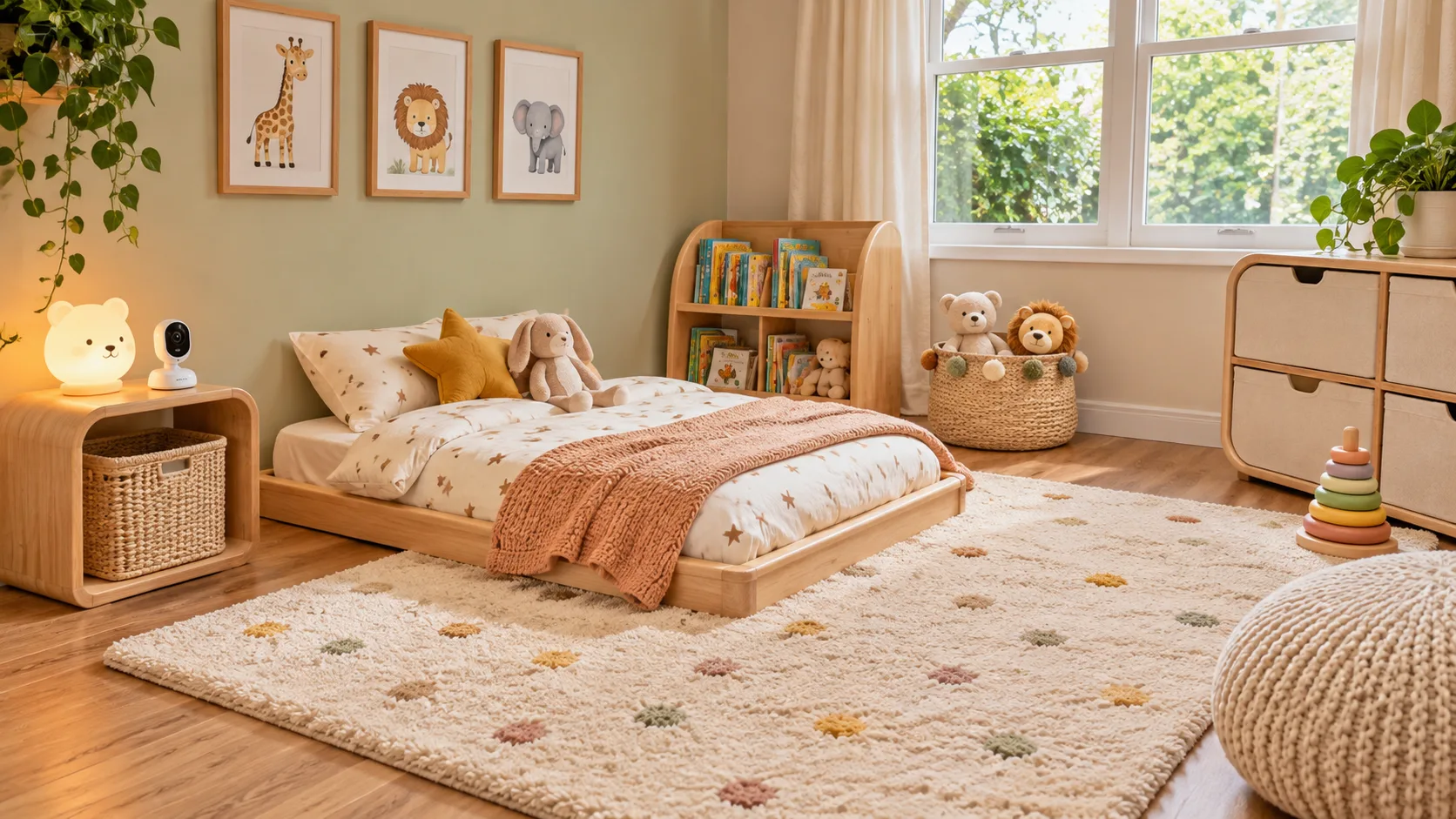
A toddler floor bed is a low sleeping arrangement designed to help young children get in and out of bed more easily. Unlike traditional raised beds, these designs place the mattress close to the floor. Many parents consider them when transitioning their children from cribs to larger sleeping spaces. However, choosing the right bed requires careful attention to safety, mattress size, and bedroom setup.
Floor beds are often associated with Montessori-inspired bedrooms because they allow toddlers greater freedom of movement. They come in different styles, including simple wooden frames, low platform beds, and house-shaped designs. Some use standard crib mattresses, while others accommodate larger mattress sizes. Understanding these differences helps families choose a practical sleeping arrangement.
If you are considering a toddler floor bed, it is important to look beyond appearance and convenience. Mattress firmness, frame construction, room safety, and your child’s developmental stage all matter. A low bed does not automatically make a sleeping environment safe. This guide explains toddler floor bed dimensions, safety features, benefits, common mistakes, and useful buying tips.
What Is a Toddler Floor Bed?
A toddler floor bed is a sleeping arrangement that places a mattress directly on or very close to the floor. Some designs use a low wooden frame, while others consist of a suitable mattress on a supportive base. The main feature is easy access without climbing onto a high bed. This makes floor beds different from traditional elevated children’s beds.
Many parents choose floor beds because they want their toddlers to move more independently. A child can generally get into bed or leave it without climbing over crib rails. However, this freedom also means the bedroom must be carefully childproofed. A toddler who leaves the bed during the night may explore nearby furniture, toys, or other areas.
Floor beds are available in several sizes and construction styles. Some are designed specifically for toddlers, while larger versions resemble low single or twin beds. They may include partial guardrails, simple platforms, or decorative wooden structures. The best choice depends on the child’s age, mattress requirements, available bedroom space, and manufacturer safety instructions.
When Is a Toddler Ready for a Floor Bed?
There is no single age when every child becomes ready for a floor bed. Readiness depends on development, sleeping habits, mobility, and the safety of the surrounding environment. Parents often consider moving children when they begin climbing out of their cribs. A safe transition should be based on individual needs rather than a fixed birthday.
In the United States, regulated toddler beds are intended for children at least 15 months old and weighing no more than 50 pounds. That minimum does not mean every 15-month-old is ready for unrestricted bedroom access. Many children remain comfortable in their cribs for longer. Parents should also consider whether their toddlers can safely navigate the room after leaving bed.
A child who repeatedly climbs over crib rails may need a different sleeping arrangement. Crib manufacturers commonly specify height limits, and a child reaching 35 inches is an important transition consideration. For children younger than 12 months, follow infant safe-sleep recommendations instead of using an ordinary floor bed. A pediatrician can help when readiness or developmental circumstances are uncertain.
Toddler Floor Bed Sizes and Dimensions Explained
Toddler floor beds come in different dimensions depending on the frame and mattress type. In the United States, a standard crib mattress is approximately 28 inches wide and 52 inches long. Traditional toddler beds generally use this mattress category. The precise permitted mattress dimensions and thickness should always follow the bed manufacturer’s specifications.
Some floor bed frames accommodate twin mattresses, which are commonly around 38 inches wide and 75 inches long. Twin beds provide more sleeping space and may remain useful as a child grows. However, a larger mattress is not automatically suitable for every toddler. Its safety depends on the complete bed design, age suitability, and surrounding environment.
Before purchasing, measure both the bedroom and the mattress opening inside the frame. Allow enough room for safe movement around furniture and access to the doorway. Check that the mattress fits securely without dangerous gaps between the mattress and frame. Never assume two products are compatible simply because they share the same advertised size name.
How to Choose the Right Mattress for a Floor Bed
Mattress selection is one of the most important considerations when choosing a toddler floor bed. A suitable mattress should provide firm, even support and fit the designated frame correctly. Its thickness must remain within the manufacturer’s recommended limits. Oversized, undersized, or excessively thick mattresses may interfere with the bed’s intended safety features.
Different mattresses use foam, springs, or combinations of supportive materials. Parents should consider construction quality, comfort, cleaning requirements, and the specifications provided by the manufacturer. A washable mattress protector can help manage ordinary spills and accidents. However, avoid adding soft toppers or loose cushioning that could create unnecessary hazards for young children.
Ventilation is another practical consideration, especially when a mattress sits close to the floor. A compatible slatted base may help airflow beneath the mattress, while a mattress placed directly on flooring may need additional moisture management. Follow the manufacturer’s care instructions and inspect regularly for dampness. The right mattress should support both comfortable sleep and responsible maintenance.
Important Toddler Floor Bed Safety Features
A safe toddler floor bed should have sturdy construction, secure connections, and appropriately finished surfaces. Wooden frames should not contain exposed splinters, sharp corners, or loose components. Decorative features must not create openings where a child could become trapped. Choosing a product designed and tested for its intended age group is particularly important.
Guardrails can provide an additional boundary on some beds, but their design requires careful consideration. Openings between rails, the frame, and mattress can create entrapment hazards if dimensions are unsuitable. Do not attach improvised rails or padding to compensate for an incompatible design. Use only accessories specifically approved for that bed and mattress combination.
A low sleeping surface reduces the distance from the mattress to the floor, but it does not eliminate other risks. Toddlers may still encounter furniture, electrical cords, or objects after leaving bed. The entire bedroom should therefore be treated as part of the sleeping environment. Safe furniture placement and appropriate supervision remain important even with a low frame.
How to Childproof a Room With a Floor Bed
Childproofing becomes especially important when a toddler can leave bed independently. Secure dressers, bookshelves, and other potentially unstable furniture to prevent tip-over accidents. Keep medications, small objects, and hazardous household products inaccessible. Cover or protect electrical outlets and manage accessible cords according to appropriate child safety guidance.
Windows and window coverings also require careful attention. Keep beds away from windows and ensure blind cords are completely inaccessible to children. Use suitable window guards where appropriate, without blocking required emergency exits. Check that doors, stairways, and nearby areas do not create opportunities for unsupervised access to hazardous locations.
A simple bedroom layout can make the environment easier to manage. Keep walking areas clear of toys, loose rugs, and unnecessary furniture that could cause falls. Select age-appropriate furnishings and avoid heavy objects within reach. Before introducing the bed, examine the room from your toddler’s height to identify hazards that adults might otherwise overlook.
Montessori Floor Beds and Their Benefits
Montessori-inspired floor beds are associated with the idea of creating an accessible environment for young children. These designs make the sleeping surface easy to reach without requiring assistance to climb into bed. They are often included in bedrooms with low shelves and simple furniture. However, Montessori styling alone does not establish whether a bed meets appropriate safety requirements.
One potential advantage is allowing toddlers to participate more independently in their bedtime routine. They may learn to approach the bed when tired and become familiar with their sleeping environment. Some families appreciate the accessible design during everyday activities. Still, independent access does not guarantee better sleep or make a child developmentally ready for less supervision.
Montessori floor beds are available in minimalist and decorative styles. Some have low wooden platforms, while others include house-shaped frames or partial side barriers. Parents should prioritize practical safety over visual appeal when comparing these options. A simple, well-constructed bed can be more suitable than an elaborate design with unnecessary decorative features.
Toddler Floor Bed vs Traditional Toddler Bed
The biggest difference between a floor bed and a conventional toddler bed is the sleeping surface’s height. Floor beds place the mattress close to the ground, while traditional toddler beds often use short legs and partial side rails. Both can provide an accessible transition from a crib. Their suitability depends on the child’s needs and the specific product design.
Traditional toddler beds commonly accommodate crib mattresses and may include integrated guardrails. Floor beds can offer similar dimensions or use larger mattresses, depending on the model. Neither design should be considered automatically safer in every situation. Parents need to evaluate mattress compatibility, structural integrity, access, and the hazards present in the sleeping environment.
A traditional toddler bed may appeal to families who prefer a familiar raised frame. A floor bed may suit households looking for a lower sleeping surface or a minimalist bedroom arrangement. Both options require age-appropriate equipment and careful room preparation. The better choice is the one that meets safety requirements and fits the family’s practical needs.
How to Transition From a Crib to a Floor Bed
Moving from a crib to a floor bed is a meaningful change in a toddler’s sleeping routine. Begin by choosing an appropriate bed and preparing the entire room for independent movement. Introduce the new sleeping space calmly and explain the change using simple, reassuring language. Keeping the usual bedtime schedule can help maintain familiar expectations.
Parents can make the transition easier by maintaining consistent routines around bathing, reading, and preparing for sleep. Allowing a toddler to become familiar with the bed during supervised daytime activities may also help. Avoid adding too many changes to the bedtime routine at once. A predictable environment can make the new arrangement feel less unfamiliar.
Some children adjust quickly, while others need additional reassurance and repeated reminders about bedtime expectations. Toddlers may leave their new beds more frequently because they can move around independently. Respond consistently and calmly while maintaining appropriate supervision. If sleep difficulties continue or safety concerns arise, discuss the transition with a qualified pediatric professional.
Common Toddler Floor Bed Mistakes to Avoid
One common mistake is purchasing a floor bed based entirely on appearance. Decorative house frames, colorful finishes, and attractive photographs can make products appealing. However, safety information, appropriate dimensions, and manufacturer instructions are more important than styling. Always verify that the bed is suitable for the intended age and mattress before making a purchase.
Another mistake is placing the mattress too close to hazards such as windows, furniture, heaters, or exposed cords. A low frame does not prevent toddlers from reaching unsafe objects. Parents should also avoid leaving dangerous gaps between the mattress, frame, and nearby walls. Thoughtful placement helps reduce avoidable risks within the sleeping environment.
Ignoring moisture and maintenance can create additional problems with floor-level mattresses. Poor airflow may allow dampness to accumulate beneath certain mattress designs. Regular inspection and cleaning help identify these problems before they become more serious. Avoid modifying bed frames or adding unapproved accessories, because changes may affect how the product was designed to function.
How to Choose the Best Toddler Floor Bed
Start by reviewing the manufacturer’s recommended age, weight limits, mattress specifications, and assembly instructions. Look for sturdy materials, secure fittings, and construction designed for children’s use. Where applicable, check compliance with relevant toddler bed safety standards. A trustworthy product should provide clear information rather than relying only on attractive marketing descriptions.
Next, consider the size and layout of your child’s bedroom. A compact crib-sized frame may suit smaller rooms, while an appropriately designed larger bed may offer more space. Remember to account for the complete frame dimensions rather than measuring the mattress alone. Leave suitable space for safe movement and everyday cleaning.
Finally, compare practical features such as cleaning access, mattress ventilation, replacement parts, and assembly requirements. A simple design may be easier to maintain than one with unnecessary decorative components. Consider your budget, but do not compromise essential safety requirements to save money. The best toddler floor bed is one that fits properly, functions reliably, and suits your child’s developmental needs.
Caring for and Maintaining a Toddler Floor Bed
Regular maintenance helps keep a toddler floor bed clean and functioning properly. Inspect the frame for loose connections, damaged surfaces, and signs of wear. Follow the manufacturer’s instructions when tightening approved fasteners or cleaning materials. Address damage promptly rather than continuing to use a bed with weakened or potentially hazardous components.
Mattresses also need appropriate care to remain comfortable and hygienic. Wash bedding according to its care instructions and clean spills promptly. If the mattress rests close to the flooring, check underneath for trapped moisture or signs of mold. Some manufacturers recommend specific ventilation methods, so follow the guidance provided for your mattress and frame.
As your toddler grows, reassess whether the bed still meets their needs. Check the manufacturer’s weight and size limits and observe whether the sleeping area remains suitable. A larger bed may eventually become appropriate as the child develops. Regular reviews help families make practical changes without assuming that the original arrangement will remain suitable indefinitely.
Conclusion
A toddler floor bed can provide an accessible sleeping arrangement for children who are developmentally ready to transition from a crib. These beds are available in different sizes, materials, and designs. Their low height can make independent access easier, but it does not remove the need for careful safety planning. Choosing a suitable product requires attention to construction, mattress fit, and room preparation.
Mattress firmness, correct dimensions, safe furniture placement, and appropriate childproofing should guide every decision. Parents should also consider their toddler’s age, mobility, and sleeping habits before making the transition. A consistent bedtime routine can support adjustment to the new environment. Following manufacturer instructions and maintaining the bed regularly helps reduce preventable problems.
The best toddler floor bed is not necessarily the most expensive or decorative option. A simple, sturdy design with a correctly fitted mattress may provide everything a family needs. Focus on practical safety, comfort, and developmental readiness rather than appearance alone. With thoughtful preparation, families can create a comfortable sleeping space that supports their child’s changing needs.
Frequently Asked Questions (FAQs)
What age is appropriate for a toddler floor bed?
There is no universal age for moving to a floor bed. In the United States, regulated toddler beds are intended for children at least 15 months old, but readiness depends on development and safety.
What size mattress is best for a toddler floor bed?
Many toddler beds use a standard crib mattress measuring approximately 28 by 52 inches. Some floor beds accommodate larger mattresses, but the mattress must match the manufacturer’s approved dimensions and thickness requirements.
Are toddler floor beds safer than regular beds?
Floor beds have a lower sleeping surface, which reduces the height of a potential fall. However, they are not automatically safer because toddlers can leave the bed and encounter hazards elsewhere in the room.
Can a one-year-old sleep in a floor bed?
A 12-month-old should not automatically be moved to a floor bed. Many products have higher minimum ages, and readiness varies. Consult the manufacturer’s instructions and a pediatrician when deciding whether a transition is appropriate.
Do toddler floor beds need guardrails?
Not every floor bed includes guardrails, but any rails used must be appropriate for the bed and mattress. Avoid improvised barriers, dangerous gaps, or unapproved accessories that could create entrapment hazards.