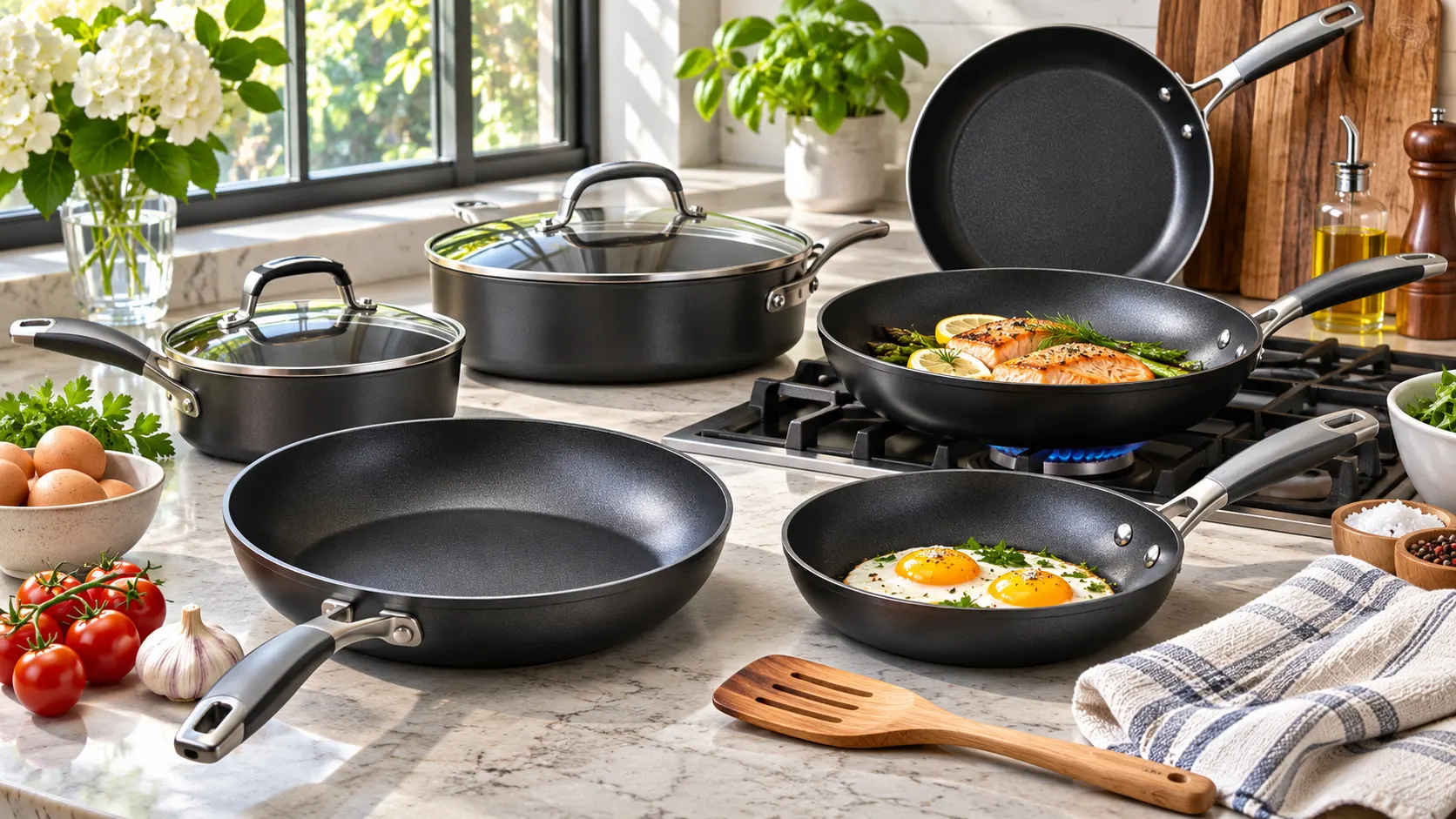
The best nonstick pans make everyday cooking easier by preventing food from sticking, reducing cleanup time, and helping you prepare meals with less added oil. Whether you enjoy cooking eggs, pancakes, vegetables, or delicate fish, choosing the right pan can improve your kitchen experience. However, not every nonstick frying pan offers the same quality, durability, or cooking performance.
With so many materials, coatings, sizes, and brands available, finding reliable cookware can feel confusing. Some pans promise exceptional durability, while others focus on easy cleaning or affordable prices. Understanding the important features before buying helps you choose a pan that suits your cooking habits, budget, and kitchen setup.
What Makes the Best Nonstick Pans Worth Buying?
The best nonstick pans combine reliable food release, even heat distribution, comfortable handling, and practical durability. A quality nonstick coating allows delicate ingredients to slide across the cooking surface without excessive oil. This makes everyday cooking more convenient, especially when preparing breakfast dishes or meals that require gentle heat and careful flipping.
However, a smooth cooking surface alone does not guarantee excellent performance. The pan should also heat consistently, preventing hot spots that cause food to cook unevenly or burn unexpectedly. A sturdy base, balanced construction, and comfortable handle contribute to better cooking control and help make the pan easier to use.
Another important consideration is how well the cookware performs after repeated use. Even premium nonstick coatings gradually wear down, especially when exposed to excessive heat, abrasive cleaning, or metal utensils. Choosing cookware with clear care instructions and realistic durability expectations provides better value than relying entirely on attractive packaging or marketing promises.
Understand the Different Types of Nonstick Coatings
Traditional nonstick pans commonly use polytetrafluoroethylene, known as PTFE, to create a smooth cooking surface. This material provides excellent food release and works particularly well for eggs, pancakes, and delicate proteins. Modern PTFE cookware is generally considered suitable for normal cooking when used according to manufacturer instructions and kept away from excessive heat.
Ceramic nonstick pans use a different type of coating, usually based on silica-derived materials. Many buyers prefer ceramic cookware because certain products are marketed without PTFE or PFAS-based coatings. Although ceramic surfaces can perform well initially, their food-release properties may decline over time, making careful cleaning and temperature control especially important.
Some manufacturers also advertise titanium-reinforced, diamond-infused, or granite-style nonstick coatings. These descriptions often refer to additives, reinforcement materials, or decorative finishes rather than entirely different coating technologies. Before purchasing, check the actual coating composition, recommended cooking temperatures, and care requirements instead of assuming that a premium-sounding label guarantees better performance.
Choose the Right Pan Material for Even Cooking
Aluminum is one of the most common materials used in nonstick frying pans because it transfers heat efficiently. This allows cookware to warm relatively quickly and respond to changes in burner temperature. However, lightweight aluminum pans with thin bases may develop uneven heating or lose their shape after repeated exposure to high temperatures.
Hard-anodized aluminum offers a more durable exterior surface through a specialized manufacturing process. It can provide a strong foundation for nonstick coatings while maintaining the heat-conducting advantages of aluminum. Hard-anodized cookware is popular among home cooks who want dependable everyday performance, although overall quality still depends on the pan’s construction and coating.
Stainless steel cookware with a bonded aluminum core or base offers another option for buyers seeking sturdy construction. These designs combine the structural strength of stainless steel with improved heat distribution from aluminum. However, a stainless steel exterior does not automatically mean better nonstick performance, so evaluate the coating and overall design separately.
Pick the Best Nonstick Pan Size for Your Kitchen
Choosing the correct pan size makes cooking easier and helps prevent overcrowding. An 8-inch nonstick frying pan is useful for preparing individual portions, such as a single omelet or a small serving of vegetables. Its compact design also makes storage convenient, particularly in kitchens with limited cabinet space or smaller cooking surfaces.
A 10-inch nonstick pan is often a practical everyday choice for individuals, couples, and smaller households. It provides enough cooking space for several eggs, pancakes, or moderate portions of protein. This versatile size balances capacity and maneuverability, making it suitable for breakfast preparation, quick lunches, and many common stovetop recipes.
Larger 12-inch nonstick skillets are helpful when preparing family meals or cooking multiple portions simultaneously. However, a wider pan may feel heavier, require additional storage space, and heat unevenly on undersized burners. Consider the usable flat cooking area rather than relying entirely on the advertised diameter, which often includes the pan’s sloping sides.
Look for Strong Construction and a Stable Base
A well-constructed nonstick pan should feel balanced and stable when placed on a cooking surface. The bottom should sit flat against the stovetop, allowing heat to spread consistently across the cooking area. Poorly constructed pans may rock, wobble, or develop warped bases that interfere with efficient cooking and create frustrating temperature differences.
A thicker base can help distribute heat more evenly and reduce sudden temperature changes. However, thickness alone does not guarantee superior performance because the materials and bonding methods also influence heating behavior. Look for cookware that combines thoughtful construction with manageable weight, especially when selecting a pan for frequent everyday use.
Examine the pan’s interior and exterior for visible manufacturing problems before making a purchase. The cooking surface should appear smooth, while the handle attachment should feel secure without unnecessary movement. Quality control, material specifications, and clear warranty information can provide additional confidence when comparing cookware from unfamiliar manufacturers or online sellers.
Check Handle Comfort and Heat Resistance
The handle plays an important role in how comfortable and safe a nonstick frying pan feels during cooking. A well-designed handle should provide a secure grip without requiring excessive hand pressure. Its shape, length, and weight distribution influence how easily you can lift, tilt, move, or transfer the pan between cooking surfaces.
Stay-cool handles are convenient because they are designed to reduce heat transfer during normal stovetop cooking. Silicone-covered and certain heat-resistant synthetic handles may remain more comfortable than exposed metal under appropriate conditions. However, handles can still become hot during extended cooking, especially near gas flames or when cookware is used inside an oven.
Handle attachment also deserves attention when comparing nonstick cookware. Riveted handles are common and can provide a secure connection, although food residue may collect around interior rivets. Welded or rivet-free interior designs may simplify cleaning, but overall reliability depends on manufacturing quality, construction methods, and the specific cookware model.
Make Sure the Pan Works With Your Stovetop
Not every nonstick pan is compatible with every cooking surface, making stovetop compatibility an essential buying consideration. Most conventional nonstick pans work on gas and electric stovetops when used correctly. However, induction cooking requires cookware with a suitable magnetic base, so buyers should confirm compatibility before purchasing a new frying pan.
Induction-ready nonstick pans often feature a magnetic stainless steel layer attached to an aluminum body. This construction allows the pan to interact with the induction cooktop while benefiting from aluminum’s heat-conducting properties. Check the manufacturer’s specifications or induction symbol because an ordinary aluminum pan generally will not work on induction without an appropriate magnetic base.
Gas burners also require attention because flames can extend beyond the pan’s base and heat the sides or handle. Electric and glass-ceramic stovetops benefit from flat, stable cookware that makes consistent contact with the heating surface. Selecting a compatible pan helps improve cooking efficiency while reducing avoidable damage to the cookware and surrounding equipment.
Consider Oven Safety and Temperature Limits
Some nonstick frying pans can move directly from the stovetop into the oven, offering greater flexibility for certain recipes. However, oven-safe temperatures vary significantly between cookware models and coating types. Before purchasing, check the manufacturer’s maximum temperature rating for the entire pan, including its handle, attachments, lid, and nonstick surface.
High cooking temperatures can shorten the lifespan of many nonstick coatings. PTFE-coated cookware should not be overheated, and manufacturers commonly recommend avoiding temperatures above approximately 500°F or 260°C, although individual limits may be lower. Never leave an empty nonstick pan heating unattended, as its surface temperature can rise rapidly.
Buyers who frequently prepare high-temperature dishes should consider whether traditional nonstick cookware matches their cooking habits. Stainless steel or cast iron may be more suitable for intense searing and certain oven-based recipes. Nonstick pans are generally most useful for low-to-medium-heat cooking, where food release and gentle temperature control matter more than extreme heat.
Evaluate Nonstick Performance and Food Release
Reliable food release is one of the main reasons people invest in nonstick cookware. A good pan allows foods such as eggs, fish, and pancakes to move easily without tearing or breaking apart. However, coating performance depends on several factors, including cooking temperature, ingredient moisture, oil quantity, and the condition of the surface.
When evaluating nonstick pan reviews, look for examples of everyday cooking rather than relying only on advertising demonstrations. Independent tests involving eggs, pancakes, and delicate proteins can reveal how consistently a pan releases food. Reviews conducted after extended use are particularly valuable because they may highlight changes in coating performance that short demonstrations cannot identify.
Remember that a nonstick surface does not eliminate the need for proper cooking techniques. Adding a small amount of butter or cooking oil can improve flavor and help certain foods brown evenly. Preheating gently, avoiding excessive temperatures, and using suitable utensils also contribute to more predictable results and longer-lasting nonstick performance.
Compare Weight, Balance, and Ease of Handling
A pan’s weight influences how comfortable it feels during everyday cooking. Lightweight nonstick pans are easy to lift, store, and move, making them convenient for quick breakfasts or smaller meals. However, extremely lightweight cookware may have thinner construction, which sometimes affects heat distribution, stability, and resistance to warping.
Heavier nonstick skillets often provide a more substantial feel and may include thicker bases or reinforced materials. This can improve stability and temperature consistency, although additional weight may make one-handed handling more difficult. The ideal choice depends on your cooking style, preferred pan size, and how frequently you move cookware while preparing food.
Balance matters just as much as total weight when choosing cookware. A pan with an unusually heavy handle may tilt backward when empty, while an oversized body can feel awkward during pouring. When possible, hold the cookware before buying and check whether its overall design feels comfortable, secure, and manageable during normal kitchen tasks.
Check Cleaning Requirements and Maintenance Needs
Easy cleaning is one of the biggest advantages of cooking with nonstick pans. Most food residue can be removed using warm water, mild dish soap, and a soft sponge. However, abrasive scrubbers, harsh cleaning chemicals, and rough utensils can damage certain coatings, making it important to follow the manufacturer’s specific care instructions.
Some nonstick cookware is advertised as dishwasher-safe, but handwashing is often recommended to extend coating life. Dishwasher detergents, repeated heat exposure, and contact with other dishes may gradually affect certain finishes. Allowing the pan to cool before washing also helps reduce sudden temperature changes that can stress cookware materials.
Storage habits are another important factor in protecting a nonstick cooking surface. Stacking pans directly against other cookware can cause scratches, especially when metal bases rub against coated interiors. Using protective pan separators, soft cloths, or dedicated storage spaces can help preserve the surface and keep the cookware ready for regular use.
Understand Nonstick Pan Safety Before Buying
Nonstick cookware safety depends on coating materials, manufacturing quality, and proper cooking practices. Many modern PTFE-coated pans are manufactured without intentionally added PFOA, a chemical previously associated with certain production processes. However, a PFOA-free label does not necessarily mean that cookware is free from all PFAS substances, so understanding product claims matters.
Buyers looking for alternatives may consider ceramic-coated pans that are specifically labeled as free from PTFE and PFAS. Nevertheless, material claims should be supported by clear manufacturer information rather than vague descriptions such as natural, healthy, or chemical-free. Choosing cookware from companies that disclose coating composition and safety instructions can make comparisons easier.
Proper use is equally important for maintaining safe cooking conditions. Avoid overheating nonstick cookware, provide appropriate kitchen ventilation, and follow the recommended temperature limits. If a coating becomes severely scratched, flakes, peels, or noticeably loses its performance, replacing the pan is generally a practical choice rather than continuing to use damaged cookware.
Compare Prices, Warranties, and Long-Term Value
Nonstick pans are available across a wide range of prices, from inexpensive everyday models to premium cookware collections. Higher prices may reflect stronger construction, improved handles, better heat distribution, or additional design features. However, expensive cookware does not automatically guarantee a significantly longer-lasting nonstick coating, making careful comparison essential before purchasing.
Budget-friendly nonstick frying pans can offer good value for occasional cooking or households that replace coated cookware periodically. Mid-range options may provide a useful balance between build quality, comfort, and affordability. Premium models may appeal to frequent home cooks who prioritize thoughtful design, heavier construction, and more consistent everyday cooking performance.
Warranty coverage can also influence the overall value of a purchase. Some manufacturers provide limited warranties covering defects in materials or workmanship, while excluding normal coating wear and misuse. Read the warranty conditions carefully, compare replacement costs, and consider how often you realistically expect to use the pan before deciding whether a higher price is justified.
Common Mistakes to Avoid When Buying Nonstick Pans
One common buying mistake is choosing cookware based entirely on appearance or brand popularity. Attractive finishes, colorful handles, and impressive packaging do not necessarily indicate superior cooking performance. Instead, prioritize coating quality, heat distribution, handle comfort, stovetop compatibility, and practical maintenance requirements when comparing the best nonstick pans for everyday use.
Another mistake is purchasing a pan that does not match your usual cooking habits. A large skillet may seem versatile, but it can become inconvenient when preparing small portions or cooking on compact burners. Similarly, selecting lightweight cookware for frequent high-temperature cooking may lead to disappointing results because nonstick coatings are generally unsuitable for intense heat.
Finally, avoid assuming that every advertised feature provides meaningful everyday benefits. Claims involving advanced minerals, reinforced surfaces, or exceptional durability should be assessed alongside genuine customer experiences and clear material specifications. A straightforward pan with dependable construction, appropriate coating, and comfortable handling may deliver better value than an expensive model filled with unnecessary extras.
Conclusion
Choosing the best nonstick pans involves more than finding a smooth cooking surface or an attractive design. Materials, coating composition, pan size, heat distribution, and stovetop compatibility all influence performance. Understanding these features helps you narrow down your options and select cookware that supports your everyday cooking needs.
Before buying, pay particular attention to construction quality, handle comfort, cleaning requirements, and recommended temperature limits. Consider how frequently you cook, which meals you prepare, and whether the pan will fit your existing kitchen equipment. Evaluating these practical details can prevent unnecessary purchases and make the cooking experience more enjoyable.
Ultimately, the right nonstick pan should deliver dependable food release, convenient maintenance, and comfortable handling at a reasonable price. Rather than focusing entirely on premium marketing claims, choose cookware with clearly explained materials and care instructions. With proper use and maintenance, a well-selected nonstick frying pan can remain a useful part of your kitchen routine.
Frequently Asked Questions
What type of nonstick pan is best for everyday cooking?
A quality PTFE-coated or ceramic-coated aluminum pan can work well for everyday cooking. Choose based on your coating preferences, stovetop compatibility, heat distribution, and maintenance expectations rather than relying on one material alone.
Are ceramic nonstick pans better than traditional nonstick pans?
Ceramic pans can be a suitable alternative for buyers seeking PTFE-free cookware. However, traditional PTFE coatings often maintain food-release performance longer, while ceramic coatings may gradually lose their initial slickness with regular use.
How long should a good nonstick pan last?
A nonstick pan may last several years, although its lifespan depends on coating quality, cooking frequency, heat exposure, and cleaning habits. Replace cookware when the coating becomes significantly damaged or loses reliable performance.
Can you use metal utensils on nonstick pans?
Most nonstick cookware benefits from silicone, wooden, or other manufacturer-approved utensils. Metal tools can scratch or damage certain coatings, so check the care instructions before using them on any coated cooking surface.
What size nonstick pan should I buy first?
A 10-inch nonstick frying pan is a versatile starting point for many households. It provides enough cooking space for common breakfast dishes and smaller meals while remaining relatively easy to handle, clean, and store.