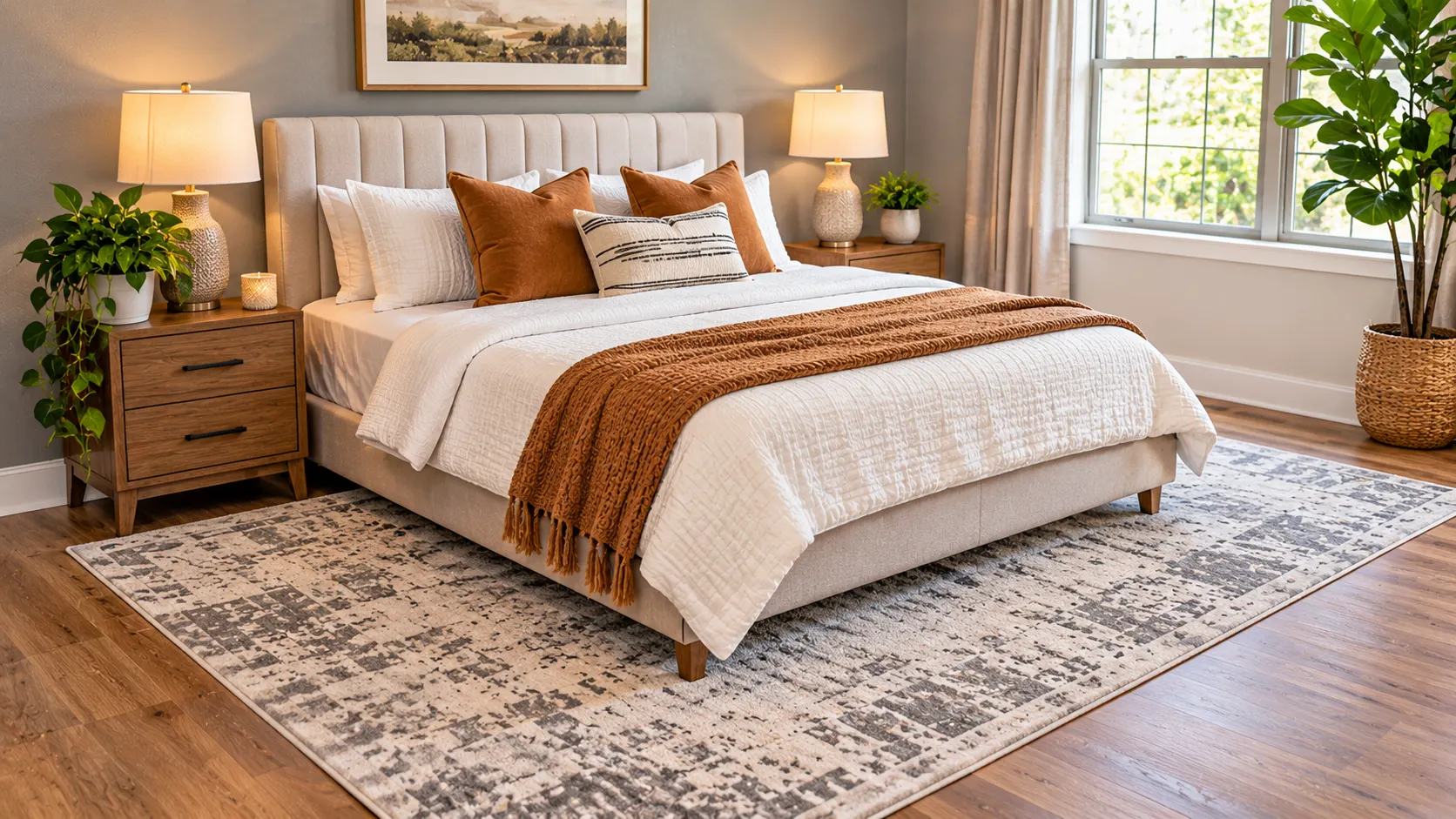
Choosing the right rug can completely change how your bedroom looks and feels. However, finding the perfect rug size for a queen bed can be confusing, especially when different rug dimensions and placement options are available. A rug that is too small may look disconnected from the furniture, while an oversized rug can overwhelm a compact bedroom. Understanding the correct measurements makes decorating much easier.
A queen-size bed typically measures 60 inches wide and 80 inches long, making it important to choose a rug that provides enough coverage around the furniture. Popular bedroom rug sizes include 5×8, 6×9, 8×10, and 9×12 feet. Each option creates a different appearance depending on the room dimensions and where the rug is positioned.
This practical guide explains how to choose the best rug size for a queen bed, compare common dimensions, and arrange rugs in different bedroom layouts. You will also learn about rug materials, placement techniques, and common decorating mistakes to avoid.
What Is the Best Rug Size for a Queen Bed?
The best rug size for a queen bed is often 8×10 feet because it provides generous coverage around the bed. This size works well in many medium-sized bedrooms and creates a comfortable surface beside the mattress. However, the ideal rug dimensions depend on the available floor space, furniture arrangement, and personal decorating preferences.
A 6×9 rug is another popular option for bedrooms where an 8×10 rug may feel too large. It can extend beyond the sides of the bed when positioned thoughtfully. Smaller rugs, such as 5×8 feet, can also work, particularly when placed beneath the lower portion of the bed rather than underneath the entire frame.
For spacious bedrooms, a 9×12 rug creates a larger decorative foundation and can accommodate additional furniture. This option works well when you want more floor coverage around the bed. Before selecting any size, measure your bedroom carefully to ensure the rug fits comfortably without interfering with doors, wardrobes, or walking areas.
Standard Queen Bed Dimensions Explained
A standard queen-size mattress measures approximately 60 inches wide and 80 inches long. These dimensions equal 5 feet in width and about 6 feet 8 inches in length. Understanding the mattress measurements is important because the rug should provide enough visible coverage around the bed to create a coordinated appearance.
The complete bed frame may be slightly wider or longer than the mattress, depending on its construction. Upholstered frames, decorative headboards, and extended bed bases can increase the overall footprint. When planning rug placement, measure the entire bed frame rather than relying exclusively on standard mattress dimensions.
Nightstands and other bedroom furniture also influence the amount of floor space available for a rug. A large bedside table may affect where the rug begins, while a bench at the foot of the bed may require additional coverage. Measuring these pieces helps create a practical layout that feels comfortable and organized.
How to Measure Your Bedroom for a Rug
Measuring your bedroom is the first step toward choosing a rug that fits the available floor space. Use a measuring tape to record the room’s length and width, paying attention to permanent fixtures and furniture. These measurements help determine whether a larger rug will fit comfortably or whether a more compact option is appropriate.
Next, measure the queen bed and identify where it sits within the room. Consider the distance between the bed and surrounding walls, wardrobes, and other furniture. Ideally, enough uncovered flooring should remain where needed for doors to open and people to move comfortably around the bedroom.
You can use painter’s tape to outline different rug dimensions on the floor before making a purchase. This simple technique helps you visualize how much space a 6×9 or 8×10 rug would occupy. It also reveals whether the selected rug might interfere with furniture placement or create an inconvenient walking arrangement.
Is a 5×8 Rug Big Enough for a Queen Bed?
A 5×8 rug can work with a queen bed, but its placement requires careful consideration. Because a standard queen mattress is 5 feet wide, a rug measuring 5 feet across will not extend beyond both sides when aligned in the same direction. This limits its ability to provide substantial coverage beside the bed.
A practical alternative is positioning the rug horizontally beneath the lower portion of the bed. With the 8-foot side running across the bed, the rug can extend approximately 18 inches beyond each side of a 60-inch-wide mattress when centered. The actual visible coverage depends on the bed frame and placement.
This arrangement is particularly useful in compact bedrooms where larger rugs may not fit comfortably. However, the rug may provide limited coverage near the head of the bed or beside nightstands. A 5×8 option is generally better suited to partial coverage rather than creating a large floor area around the entire bed.
Is a 6×9 Rug Good for a Queen Bed?
A 6×9 rug is a practical choice for many queen bed layouts because it provides more flexibility than smaller rugs. Its 9-foot dimension can run horizontally across the bed, creating visible coverage on both sides. This arrangement works particularly well when the rug sits beneath the lower portion of the bed.
When centered horizontally, a 9-foot-wide rug extends approximately 24 inches beyond each side of a standard 60-inch mattress. This provides a comfortable amount of exposed rug beside the bed, although a wider bed frame may reduce the visible extension. Positioning the rug carefully helps maintain a balanced appearance.
A 6×9 rug is useful for bedrooms where an 8×10 option would occupy too much floor space. It can create a coordinated sleeping area without extending beneath every furniture piece. For people who prefer a simple bedroom layout with moderate rug coverage, this size offers a practical middle ground.
Is an 8×10 Rug Best for a Queen Bed?
An 8×10 rug is one of the most versatile choices for a queen-size bed because it offers generous coverage around the furniture. When the 10-foot dimension runs across the bed, the rug can extend substantially beyond both sides. This creates a comfortable surface for stepping out of bed.
With a standard queen mattress measuring 5 feet wide, a centered 10-foot-wide rug provides approximately 30 inches of extension on each side. The actual amount depends on the bed frame and whether the rug is positioned symmetrically. This coverage can make the sleeping area feel more complete and visually connected.
An 8×10 rug also works with several placement styles, including arrangements where the front or lower portions of the bed rest on the rug. It may fit beneath additional furniture depending on the room. Before purchasing, confirm that your bedroom has enough space to accommodate the rug without creating awkward edges near walls or doorways.
When Should You Choose a 9×12 Rug?
A 9×12 rug can be an excellent choice for a queen bed in a spacious bedroom. Its larger dimensions provide considerable floor coverage and can help connect the bed with nearby furniture. This option is particularly suitable when the bedroom includes a bench, larger nightstands, or additional seating.
When the 12-foot dimension is positioned horizontally across the bed, a centered rug extends approximately 42 inches beyond each side of a standard queen mattress. This creates a substantial walking surface around the sleeping area. However, the exact coverage will depend on the frame width and overall furniture placement.
A 9×12 rug may feel oversized in a small bedroom, especially when placed close to multiple walls. It also requires enough clearance for doors and other furniture. Measure the available floor space carefully and consider whether the additional coverage improves the room’s appearance and functionality.
How to Place a Rug Under a Queen Bed
Rug placement affects both the appearance and practicality of a bedroom. One common approach is positioning the rug beneath the lower two-thirds of the queen bed. This creates visible coverage beside the bed while leaving the headboard area and nightstands on the exposed floor.
Another option involves placing the entire bed on a larger rug. This arrangement can create a unified sleeping area, particularly in spacious bedrooms. However, the rug must extend far enough beyond the bed to remain visible and useful rather than disappearing almost entirely beneath the furniture.
For smaller bedrooms, placing the rug beneath the foot of the bed may provide a more practical solution. This approach uses less floor space and can still introduce color and texture. Experimenting with placement before purchasing helps determine which arrangement complements the room’s proportions and everyday movement.
Should a Rug Go Under the Nightstands?
Whether a rug should extend beneath nightstands depends on its size and the bedroom layout. In many arrangements, nightstands remain outside the rug while the lower portion of the bed rests on it. This approach allows the rug to create comfortable coverage beside the sleeping area without extending all the way toward the headboard.
Larger rugs may accommodate both the queen bed and nightstands, creating a more unified furniture arrangement. However, this placement requires additional length and enough room for the rug to extend beyond the furniture. A 9×12 rug may work better for this arrangement than a smaller size.
Consistency is important when deciding where the rug should begin. Having one nightstand on the rug and the other on the exposed floor may create uneven furniture heights if the rug is thick. Choose an arrangement that keeps furniture stable and supports a balanced overall appearance.
How Far Should a Rug Extend Beyond a Queen Bed?
A rug often looks and feels comfortable when it extends approximately 18 to 30 inches beyond the sides of a queen bed. This provides enough visible coverage to make the rug a meaningful part of the bedroom design. However, there is no strict requirement that every arrangement follow these measurements.
For example, an 8×10 rug centered beneath a queen bed with its longer side running horizontally can provide around 30 inches beyond each side of the mattress. A 6×9 rug positioned similarly provides approximately 24 inches. These measurements assume standard mattress dimensions and do not account for a wider bed frame.
The amount of rug exposed at the foot of the bed also matters. A rug that ends immediately beneath the bed frame may provide limited visual interest and little practical coverage. Adjust the placement to create comfortable proportions while maintaining enough clearance for other furniture and walking areas.
Best Rug Size for a Queen Bed in a Small Bedroom
Small bedrooms require careful rug selection because oversized designs can interfere with furniture and available floor space. A 5×8 or 6×9 rug may provide enough decorative coverage without overwhelming the room. The better choice depends on how much space remains around the bed.
A 5×8 rug placed horizontally beneath the lower portion of the bed can add texture without occupying the entire floor. A 6×9 rug provides greater coverage and may feel more comfortable beside the mattress. Both options can work when positioned thoughtfully and coordinated with nearby furniture.
Light-colored rugs may create a visually open appearance, although the effect depends on the surrounding walls, flooring, and lighting. Simple patterns can also help reduce visual clutter in compact spaces. Prioritize enough clearance for walking and opening furniture rather than choosing a rug solely for its decorative appearance.
Best Rug Size for a Queen Bed in a Large Bedroom
Large bedrooms often benefit from substantial rugs that help define the sleeping area. An 8×10 or 9×12 rug can create a clear visual foundation beneath a queen bed. These sizes provide more coverage and help connect furniture pieces within a spacious room.
A 9×12 rug may be particularly useful when the bedroom includes a bench or additional seating near the bed. The larger dimensions can accommodate more furniture while leaving visible rug around the arrangement. However, the rug should still complement the room’s proportions rather than covering every available section of flooring.
If the room contains multiple functional areas, separate rugs can sometimes help distinguish them. For example, the sleeping area may have a large rug while a reading corner uses a smaller one. Coordinating colors and materials can create a consistent appearance without requiring identical rug designs throughout the bedroom.
Choosing the Best Rug Material for a Bedroom
Rug material influences comfort, durability, cleaning requirements, and overall appearance. Wool rugs are often appreciated for their softness, resilience, and natural texture. They can provide a comfortable surface beside the bed, although their cost and maintenance requirements may be higher than some synthetic alternatives.
Synthetic rugs made from materials such as polypropylene or polyester can provide affordable options with different textures and designs. Some are easier to clean than delicate natural fibers, making them practical for everyday use. However, durability and comfort vary by construction quality rather than material name alone.
Cotton, jute, and other natural materials provide additional decorative possibilities. Cotton rugs may be lightweight and easier to move, while jute introduces a textured appearance. Consider comfort underfoot, cleaning needs, allergies, and room conditions before selecting a material that suits your bedroom.
What Rug Color Works Best With a Queen Bed?
Rug color can influence how a bedroom feels and how well the furniture coordinates with the surrounding decor. Neutral shades such as beige, cream, gray, and soft brown are versatile choices. They work with many bedding colors and furniture finishes while providing a calm foundation.
Darker rugs can introduce contrast, particularly in bedrooms with light-colored furniture or walls. Navy, charcoal, and deep green may create a distinctive appearance without requiring bold patterns. However, very dark rugs can show certain types of dust or lint more noticeably, depending on their texture.
Patterned rugs offer another way to add personality and visual interest. Subtle geometric designs, traditional motifs, and abstract patterns can complement different decorating styles. Choose a rug that coordinates with your bedding and curtains without requiring every fabric or color in the room to match exactly.
How to Choose a Rug Pattern for Your Bedroom
Rug patterns can add character to a bedroom, but their scale should work with the furniture and available floor space. Large patterns may become difficult to appreciate when most of the rug is hidden beneath the bed. Smaller or more evenly distributed designs can remain visible around the exposed edges.
Bedrooms with simple bedding and neutral furniture often provide opportunities to experiment with patterned rugs. A decorative rug can become a focal point without requiring several additional accessories. Conversely, rooms with colorful wallpaper or patterned bedding may benefit from a more understated rug.
Consider how the pattern looks from different points in the room before making a final decision. A design that appears attractive in a product image may look different when partially covered by furniture. Reviewing the full pattern layout can help you choose a rug that remains appealing after placement.
Why Rug Thickness and Pile Height Matter
Rug thickness influences comfort underfoot and how easily furniture sits on the surface. A plush rug may feel soft when stepping out of bed, while a low-pile design can provide easier cleaning and furniture movement. Both options can work well depending on personal preference.
High-pile rugs may create a comfortable bedroom atmosphere, but they can collect dust and require more thorough cleaning. Furniture legs may also sink into thicker materials, making positioning more complicated. A dense, lower-pile rug can provide a more stable foundation for some bedroom arrangements.
Consider whether doors, drawers, or furniture will move across the rug. Thick materials may interfere with low-clearance furniture or require additional adjustment. Choosing an appropriate pile height helps maintain comfort while ensuring the rug remains practical for everyday bedroom activities.
Do You Need a Rug Pad Under a Queen Bed Rug?
A rug pad can improve stability and comfort when placed beneath a bedroom area rug. Depending on its material and construction, it may help reduce slipping and provide additional cushioning. This can be particularly useful when the rug rests on smooth flooring such as hardwood, laminate, or tile.
Choose a rug pad that is compatible with both the rug and the flooring material. Some pads contain components that may react with certain floor finishes, so checking product recommendations is important. The pad should also be appropriately sized to remain hidden beneath the rug edges.
Rug pads can help reduce movement, but they do not replace proper furniture placement or safe installation. A thick pad may increase the overall height of the rug and affect door clearance. Consider stability, comfort, and flooring protection when deciding which type of pad is suitable.
Common Mistakes When Choosing a Queen Bed Rug
One common mistake is purchasing a rug before measuring the bedroom and bed frame. Standard mattress dimensions provide a useful starting point, but decorative frames can increase the overall footprint. Without accurate measurements, the rug may appear smaller than expected or interfere with surrounding furniture.
Another mistake involves selecting a rug that is almost entirely hidden beneath the bed. Although some coverage underneath furniture is necessary, the exposed rug should remain visible enough to contribute to the room. Choosing the right width and placement helps create a more intentional arrangement.
Ignoring material maintenance can also lead to disappointment. A delicate, high-pile rug may require more cleaning than expected, while a thin rug might not provide the desired comfort. Consider how the bedroom is used, the amount of foot traffic, and practical cleaning requirements before making a purchase.
How to Style a Queen Bed With an Area Rug
Styling a queen bed with an area rug begins with coordinating the rug and surrounding furniture. The rug can provide a visual foundation that connects the bed, nightstands, and nearby accessories. Choose colors or textures that complement the room without requiring every decorative element to match.
Layering bedding textures can also enhance the appearance of a bedroom rug. Soft blankets, decorative pillows, and curtains can create a coordinated atmosphere when their colors work with the rug. However, excessive patterns or decorative pieces may make the room feel visually busy.
Lighting and furniture placement contribute to the final appearance. A rug may look different under natural daylight and warm evening lighting. Adjusting the bed’s position, selecting suitable bedside accessories, and keeping walking areas clear can help create a comfortable bedroom arrangement.
Conclusion
Choosing the right rug size for a queen bed depends on the bed dimensions, bedroom layout, and preferred amount of floor coverage. An 8×10 rug is a versatile option for many bedrooms, while a 6×9 rug can work well in smaller spaces. A 9×12 rug provides additional coverage for larger rooms.
Proper rug placement is just as important as selecting the correct dimensions. Positioning the rug beneath the lower portion of the bed or extending it beneath more furniture creates different visual effects. Measuring carefully and considering walking clearance helps ensure the arrangement remains practical and comfortable.
The best bedroom rug combines suitable size, comfortable materials, and colors that complement your existing decor. Whether you prefer a soft neutral rug or a patterned design, thoughtful placement can make the sleeping area feel more inviting. With the right measurements and styling choices, an area rug can become a useful and attractive addition to your bedroom.
Frequently Asked Questions (FAQs)
What size rug is best for a queen bed?
An 8×10 rug is often an excellent choice for a queen bed because it provides generous coverage on both sides. However, a 6×9 rug may work better in smaller bedrooms.
Is a 5×8 rug too small for a queen bed?
A 5×8 rug is generally too narrow for full coverage beneath a queen bed. However, positioning its longer side horizontally under the lower portion of the bed can create a practical arrangement.
Can you put a 6×9 rug under a queen bed?
Yes, a 6×9 rug can work well beneath a queen bed when positioned horizontally. It provides approximately 24 inches of coverage beyond each side of a standard queen mattress when centered.
Should a bedroom rug go under the entire bed?
Not necessarily. Many bedroom layouts position the rug beneath the lower portion of the bed, leaving nightstands on the exposed floor. Larger rugs may accommodate the entire bed and surrounding furniture.
How far should a rug extend beyond a queen bed?
A rug commonly extends around 18 to 30 inches beyond each side of a queen bed. However, the ideal amount depends on the room size, bed frame, and preferred placement.