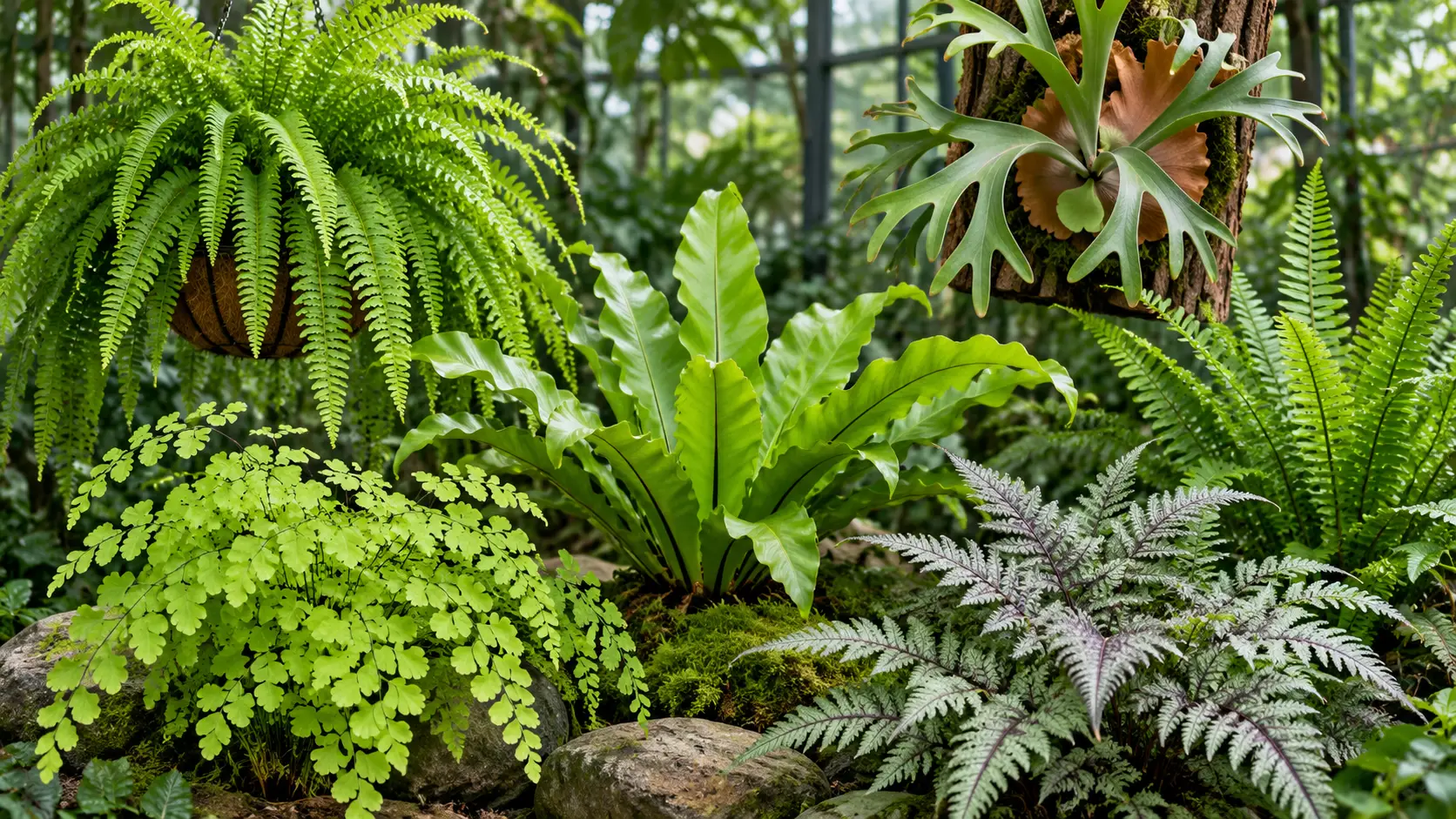
Ferns are among the oldest groups of plants on Earth, known for their beautiful green leaves and unique growth patterns. They grow naturally in forests, mountains, wetlands, and tropical regions. With thousands of species worldwide, different types of ferns offer interesting shapes, sizes, and textures for gardens and indoor spaces.
Some ferns have delicate, feathery leaves, while others feature broad, leathery foliage. Learning how to identify these plants helps gardeners choose suitable varieties and understand their growing needs. This guide explores common fern species, their identifying features, natural habitats, and practical care tips for beginners.
What Are Ferns?
Ferns are vascular plants that reproduce through spores rather than flowers or seeds. They belong to an ancient group of plants that existed long before flowering plants became widespread. Most ferns produce green leaves called fronds, which often develop from tightly curled structures known as fiddleheads. Their distinctive appearance makes them popular in ornamental gardens and indoor plant collections.
Unlike flowering plants, ferns do not produce fruits, blossoms, or seeds. Instead, many species develop spore-producing structures called sporangia, often grouped into clusters known as sori. These structures commonly appear on the undersides of mature fronds. Understanding this reproductive process is useful when learning fern identification because spore patterns can help distinguish between different species.
Ferns grow in many environments, including tropical rainforests, shaded woodlands, rocky mountains, and wetlands. Some species prefer consistently moist soil, while others tolerate relatively dry conditions once established. Their adaptability explains why fern varieties differ considerably in appearance and growing requirements. Gardeners can find suitable species for shaded outdoor spaces, containers, and indoor environments.
How to Identify Different Types of Ferns
Identifying ferns begins with observing their leaf shape, texture, and overall growth pattern. Some species produce long, narrow fronds, while others have finely divided leaves that resemble feathers. Fronds may grow upright, arch outward, or spread along the ground. Examining these visible characteristics helps narrow down possible species before considering more detailed botanical features.
Another useful identification method involves checking the underside of mature fern leaves. Many species produce sori arranged in distinctive patterns, including round clusters, elongated lines, or structures near the leaf margins. However, not every frond carries visible spores throughout the year. Comparing spore patterns with leaf characteristics improves identification accuracy, especially when several fern species look similar.
The plant’s natural habitat also provides important identification clues. Ferns growing in wet environments often have different requirements from species found on dry rocks or exposed slopes. Growth habits, including creeping rhizomes and compact crowns, can further distinguish similar plants. Combining physical observations with growing conditions offers a more reliable approach than identifying ferns through leaf color alone.
Boston Fern: A Popular Indoor Fern
The Boston fern, scientifically known as Nephrolepis exaltata, is one of the most recognizable indoor fern varieties. It produces long, arching fronds covered with numerous small leaflets. Its graceful, fountain-like appearance makes it suitable for hanging baskets, shelves, and decorative containers. Healthy plants typically display dense green foliage that creates a soft, tropical appearance in living spaces.
Boston ferns grow best in bright, indirect light and relatively humid conditions. Direct afternoon sunlight can damage their delicate foliage, particularly when plants are grown indoors. They prefer evenly moist, well-draining potting soil rather than constantly waterlogged roots. Maintaining consistent watering and sufficient humidity helps prevent brown leaf tips and excessive leaf shedding during dry indoor conditions.
Gardeners often choose Boston ferns because they create a striking display without producing flowers. Their arching foliage works particularly well in shaded patios and protected outdoor locations during suitable weather. However, these plants are sensitive to frost and prolonged dry air. Providing appropriate temperature, moisture, and light conditions encourages healthy growth throughout their active growing season.
Maidenhair Fern: Delicate and Elegant Foliage
Maidenhair ferns belong to the genus Adiantum and are known for their delicate leaflets and slender, often dark stems. Their foliage creates an airy appearance that distinguishes them from many other fern species. Individual leaflets may appear fan-shaped, rounded, or wedge-shaped, depending on the species. These features make maidenhair ferns especially attractive for shaded gardens and indoor plant displays.
Most commonly cultivated maidenhair ferns prefer indirect light, good humidity, and consistently moist growing media. Their thin foliage can dry quickly when exposed to harsh sunlight or prolonged dry conditions. Allowing the soil to become completely dry may cause significant leaf damage. However, adequate drainage remains essential because excessively wet roots can also create problems for these sensitive plants.
Maidenhair ferns are frequently grown in protected garden beds, terrariums, and humid indoor environments. Their fine texture pairs beautifully with broad-leaved plants, creating contrast in mixed arrangements. Although they can require more attentive care than some common houseplants, their distinctive appearance makes them worthwhile. Choosing a species suited to local conditions can improve long-term growing success.
Bird’s Nest Fern: Broad and Glossy Leaves
The bird’s nest fern, Asplenium nidus, looks noticeably different from traditional feathery ferns. Instead of producing finely divided foliage, it develops long, broad, strap-shaped fronds. These leaves emerge from a central rosette that resembles a nest, giving the plant its common name. Its glossy green foliage and attractive growth pattern make it popular in modern indoor plant arrangements.
Bird’s nest ferns naturally grow in humid tropical environments, often attached to trees as epiphytes. Their roots collect moisture and nutrients from organic material surrounding the plant. When cultivated indoors, they perform well in airy, well-draining potting mixtures with consistent moisture. Bright, filtered light and protection from intense direct sunlight help maintain healthy foliage and reduce leaf damage.
One important identification feature is the arrangement of fronds around the plant’s central crown. Mature leaves may develop slightly wavy margins, while certain cultivated varieties have strongly rippled edges. Gardeners should avoid allowing water to remain trapped in the crown for prolonged periods. Good airflow and careful watering support healthy growth and reduce the possibility of crown rot.
Staghorn Fern: An Unusual Tropical Fern
Staghorn ferns belong to the genus Platycerium and are famous for their unusual antler-shaped foliage. Unlike many terrestrial ferns, they naturally grow attached to trees and other surfaces. Their distinctive appearance comes from two main types of fronds: fertile fronds that resemble antlers and shield fronds that protect the growing base. These characteristics make them easy to recognize.
Staghorn ferns are commonly displayed on wooden boards, hanging mounts, and other supports. Their epiphytic growth habit allows their roots to anchor onto surfaces while absorbing moisture from surrounding organic material. They usually prefer bright, filtered light and good air circulation. Watering requirements vary according to temperature, humidity, mounting material, and the particular species being cultivated.
These tropical ferns are appreciated for their sculptural appearance and unusual growing habits. Mature plants can develop impressive branching fronds that create a dramatic visual display. Their shield fronds often become brown and papery with age, which is generally a natural process. Removing these protective fronds unnecessarily can damage the plant or interfere with its normal growth.
Kimberly Queen Fern: Upright and Structured Growth
The Kimberly Queen fern, commonly sold as Nephrolepis obliterata, is valued for its upright, sword-shaped fronds. Unlike the softer, arching appearance of Boston ferns, this plant generally develops a more vertical growth habit. Its dense green foliage makes it suitable for containers, shaded entrances, and protected patios. The structured appearance also makes it useful in formal landscaping arrangements.
Kimberly Queen ferns typically perform well in bright, indirect light and moist but well-drained soil. They can tolerate some variation in growing conditions, although prolonged dryness may damage their foliage. Regular watering is particularly important when plants grow in containers during warm weather. Protecting them from frost and excessive direct sunlight helps maintain healthy leaves and attractive growth.
An important identification feature is the plant’s upright form, with numerous narrow leaflets arranged along each frond. This characteristic helps distinguish it from more strongly arching fern varieties. Kimberly Queen ferns are often selected for decorative pots because they create height without requiring a support structure. Their dense foliage also provides an attractive background for smaller ornamental plants.
Sword Fern and Christmas Fern: Woodland Favorites
Sword ferns are recognized by their long, narrow fronds and often robust growth habits. The western sword fern, Polystichum munitum, is native to western North America and commonly grows in shaded woodland environments. Its dark green fronds contain numerous pointed leaflets arranged along a central stem. Mature plants can create large, impressive clumps in suitable outdoor growing conditions.
Christmas fern, Polystichum acrostichoides, is another popular woodland species, particularly in eastern North America. It produces evergreen fronds that often remain green through winter in its native range. The leaflets have a distinctive shape, with a small upward projection near their bases. This feature helps distinguish Christmas fern from other woodland plants with superficially similar foliage.
Both ferns are useful in shaded landscapes, although their preferred conditions are not identical. Western sword fern generally appreciates woodland soil with good drainage and some moisture, especially during establishment. Christmas fern performs well in shaded, well-drained sites and can tolerate periods of dryness once established. Selecting the right species for local climate and soil conditions improves growing success.
Asparagus Fern and Foxtail Fern: Fern-Like Plants
Asparagus fern is commonly included in collections of fern-like ornamental plants because of its delicate green appearance. However, it is not a true fern and belongs to the asparagus genus, Asparagus. These plants reproduce through flowers and seeds rather than spores. Their fine foliage resembles fern fronds, which explains why gardeners frequently associate them with traditional fern varieties.
Foxtail fern, commonly identified as Asparagus densiflorus ‘Myersii’, is another ornamental plant with a misleading common name. It produces dense, cylindrical sprays of foliage resembling fluffy fox tails. Unlike true ferns, it can develop small flowers followed by berries. Its distinctive shape makes it useful in decorative containers, borders, and warm-climate landscaping arrangements.
These fern-like plants often tolerate brighter conditions than many traditional shade-loving ferns. Nevertheless, their exact growing requirements depend on climate, soil, and exposure. Some ornamental asparagus species can spread aggressively and become invasive in suitable environments. Gardeners should check local planting guidance before introducing them into outdoor landscapes, particularly near natural habitats or protected areas.
Tree Ferns: Tall Ferns for Tropical Landscapes
Tree ferns are among the most impressive types of ferns because they develop tall, trunk-like structures supporting large crowns of fronds. They occur in several fern families and are especially associated with tropical and subtropical forests. Their elevated foliage creates an appearance resembling miniature palm trees. However, tree ferns reproduce through spores and differ botanically from true palms.
Popular examples include the Australian tree fern, Cyathea cooperi, and the soft tree fern, Dicksonia antarctica. Both develop large, divided fronds, but their growth characteristics and climate preferences differ. The trunk-like structure supports the crown and helps elevate foliage above surrounding vegetation. Mature plants can become substantial landscape features when suitable environmental conditions allow long-term growth.
Many tree ferns prefer sheltered locations with moisture, humidity, and protection from drying winds. Some species tolerate cooler conditions, while others require consistently warm temperatures. Their large fronds may become damaged during drought, frost, or prolonged exposure to intense sunlight. Before planting a tree fern, gardeners should consider mature size, water requirements, and local winter temperatures.
How to Choose the Right Fern for Your Home or Garden
Choosing a suitable fern begins with evaluating available light, humidity, and growing space. Indoor locations with bright, indirect light may support Boston ferns or bird’s nest ferns when moisture needs are met. Outdoor shaded gardens may be better suited to hardy woodland species. Understanding the natural habitat of a particular fern helps match its requirements with existing growing conditions.
Plant size and growth habits also influence selection. Compact ferns may fit small containers, while larger species require more room for expanding foliage and root systems. Hanging baskets work well for arching varieties, whereas upright species can create vertical interest. Considering mature dimensions prevents overcrowding and reduces the need for frequent transplanting or unnecessary pruning.
Maintenance expectations are another important consideration for beginners. Some ferns require steady humidity and moisture, while established hardy species may tolerate occasional dry periods. Gardeners should also research local hardiness zones before selecting outdoor varieties. Matching plant requirements with available time, climate, and growing conditions is more effective than choosing a fern based only on appearance.
Conclusion
Different types of ferns provide remarkable diversity in leaf structure, growth habits, and natural habitats. From delicate maidenhair ferns to broad-leaved bird’s nest ferns, each species has distinctive features. Understanding their appearance and reproduction makes identification easier for beginners. These ancient plants continue to play important roles in natural ecosystems and ornamental gardening.
Choosing the right fern requires careful consideration of light, moisture, temperature, and available space. Some varieties thrive in humid indoor locations, while others grow naturally in shaded woodland gardens. Learning about individual species helps prevent common care problems. Suitable environmental conditions support healthier foliage and encourage attractive growth over time.
Whether you prefer traditional feathery fronds or unusual tropical foliage, there are many fern varieties worth exploring. Begin with species that suit your environment and gradually expand your collection as your experience grows. Observing frond patterns, growth habits, and spore structures can also improve identification skills. With appropriate care, ferns can enhance indoor spaces and outdoor landscapes for years.
Frequently Asked Questions
What are the most common types of ferns?
Common types include Boston fern, maidenhair fern, bird’s nest fern, staghorn fern, Kimberly Queen fern, and sword fern. These varieties differ in appearance, size, growth habits, and environmental requirements.
How can I identify a fern by its leaves?
Examine the frond shape, leaflet arrangement, texture, and growth pattern. Look for spore-producing structures underneath mature leaves, as their arrangement can help distinguish between similar fern species.
Which types of ferns are best for indoor growing?
Boston ferns, bird’s nest ferns, and Kimberly Queen ferns are popular indoor choices. Their success depends on suitable indirect light, adequate humidity, consistent watering, and well-draining growing media.
Do all ferns need shade and moisture?
No, fern requirements vary considerably between species. Many prefer shaded, moist conditions, but some tolerate brighter light or occasional dryness. Always check the growing needs of the particular fern.
What is the difference between true ferns and asparagus ferns?
True ferns reproduce through spores and do not produce flowers or seeds. Asparagus ferns are flowering plants that produce seeds, despite having delicate foliage resembling traditional fern fronds.