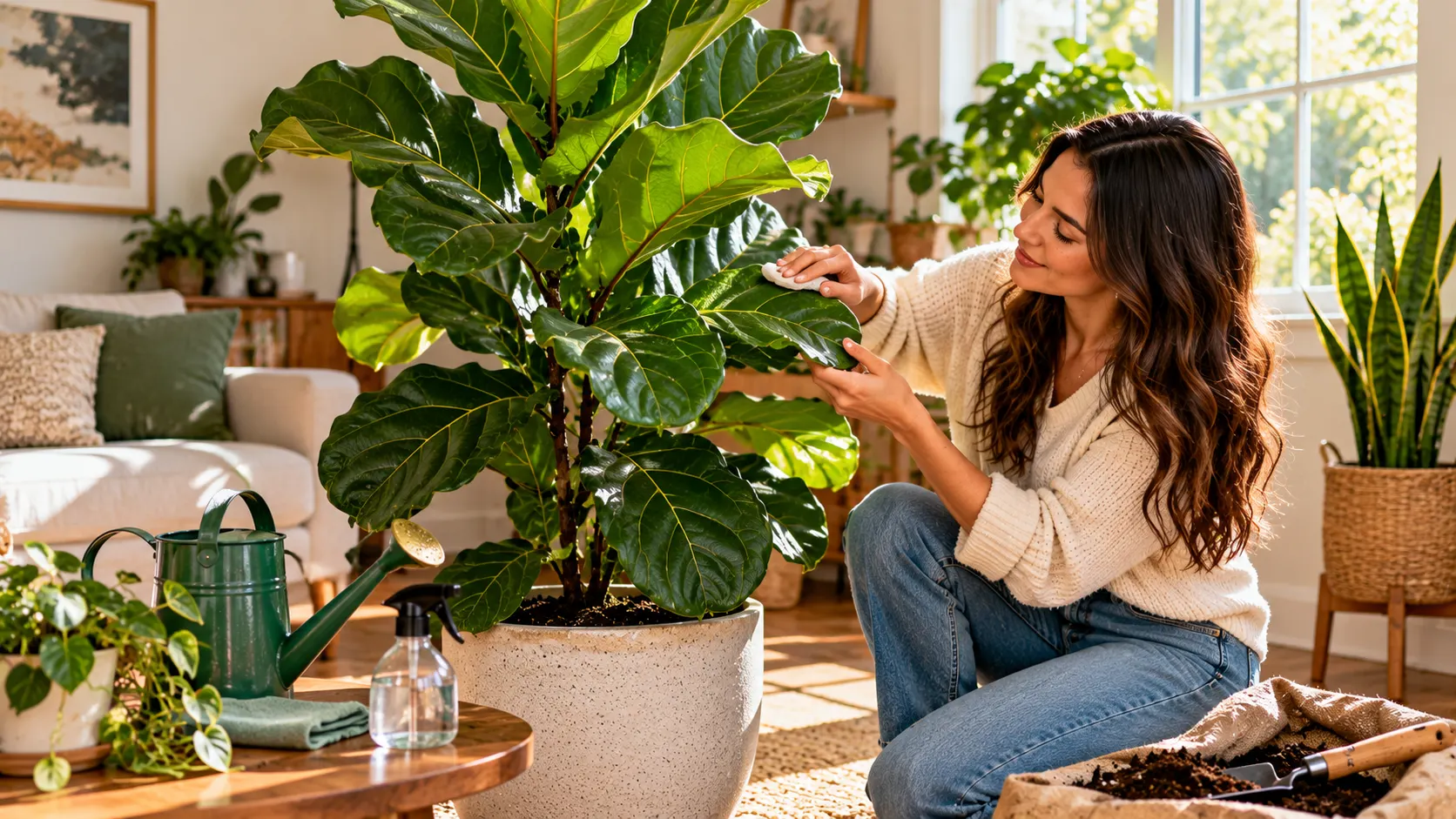
The fiddle leaf fig is one of the most popular indoor plants, admired for its large, glossy leaves and elegant tree-like appearance. Its dramatic foliage can transform living rooms, offices, and other indoor spaces into attractive green environments. However, maintaining healthy growth requires attention to sunlight, watering, and environmental conditions. Understanding proper fiddle leaf fig care helps beginners avoid common problems and grow healthier plants.
Known botanically as Ficus lyrata, this tropical plant is native to western and central Africa. In its natural environment, it can develop into a large tree, while indoor specimens usually remain much smaller. Its distinctive violin-shaped leaves make it recognizable among ornamental houseplants. Providing suitable growing conditions helps maintain the beautiful foliage that makes this plant so appealing.
Whether you recently purchased a fiddle leaf fig or want to improve the health of an established plant, consistent care is essential. Incorrect watering, sudden temperature changes, and unsuitable lighting can cause leaf discoloration or dropping. Fortunately, many problems can be prevented through simple maintenance habits. This guide explains the light, water, soil, pruning, and growing requirements of the fiddle leaf fig.
What Is a Fiddle Leaf Fig Plant?
The fiddle leaf fig is an evergreen tropical tree belonging to the Moraceae family. Its scientific name, Ficus lyrata, refers to the distinctive shape of its foliage. Mature leaves are broad, leathery, and often resemble the outline of a fiddle or violin. These characteristics make the plant a popular decorative feature.
Indoor fiddle leaf figs are commonly sold as upright trees, bushy plants, or compact selections. Their appearance depends on cultivar, pruning history, and growing conditions. Some develop a prominent central trunk, while others have multiple stems and dense foliage. Understanding these growth patterns helps gardeners select suitable plants for different spaces.
Although fiddle leaf figs are often described as demanding, their needs become easier to manage once their environment is understood. They prefer bright light, moderate moisture, and relatively stable temperatures. Sudden changes can affect their appearance, particularly when plants are moved between locations. Consistency is an important part of successful indoor care.
Best Light Requirements for Fiddle Leaf Fig
Bright light is one of the most important requirements for healthy fiddle leaf fig growth. These plants generally perform best in bright indirect light and may tolerate some direct sunlight when properly acclimated. Insufficient light can slow growth and contribute to declining foliage. Choosing a suitable location helps maintain stronger development.
A bright window can provide an appropriate environment, depending on the direction and intensity of sunlight. Gentle morning sunlight is often easier for indoor plants to tolerate than intense afternoon exposure. Sheer curtains can help reduce excessively strong light when necessary. Observing the leaves provides useful information about the plant’s response.
Fiddle leaf figs should not be moved abruptly from low-light conditions into intense direct sunlight. Sudden exposure can damage leaves that have not adapted to stronger illumination. Gradual changes allow the plant to adjust more comfortably. Providing consistent, appropriate light supports healthier foliage and more reliable growth.
How Often Should You Water a Fiddle Leaf Fig?
Watering is a major part of fiddle leaf fig care because both excessive and insufficient moisture can affect plant health. The appropriate watering frequency depends on pot size, temperature, light exposure, and soil composition. Instead of following a rigid schedule, check the growing medium regularly. Water when the upper portion has dried appropriately.
When watering is needed, apply enough water to moisten the root zone and allow excess moisture to drain. Avoid leaving the container standing in water for prolonged periods. Consistently saturated soil can restrict oxygen around the roots. This may eventually lead to root damage and declining foliage.
During warmer, brighter periods, the plant may use water more quickly. Cooler temperatures and reduced winter light can slow moisture consumption. Adjusting watering according to actual conditions helps prevent common mistakes. Careful observation is more reliable than assuming the plant needs the same amount every week.
Signs of Overwatering and Underwatering
Overwatering can cause yellowing leaves, leaf drop, and unhealthy root conditions. Dark spots may also appear when roots experience prolonged moisture stress. However, these symptoms are not unique to excessive watering. Checking the soil and root environment helps identify the likely cause.
Underwatering may cause leaves to droop, dry edges to develop, or the growing medium to shrink away from the container. Prolonged dryness can also contribute to leaf loss. A plant exposed to strong sunlight may dry more quickly than one in a cooler location. Understanding these differences helps prevent unnecessary changes.
Because the visible symptoms of watering problems can overlap, careful diagnosis is essential. Test soil moisture before adding water and inspect drainage conditions when needed. Avoid responding to every drooping leaf by watering immediately. Consistent moisture management supports healthier roots and more attractive foliage.
Best Soil for Fiddle Leaf Fig Plants
Fiddle leaf figs grow best in a well-draining potting medium that retains enough moisture to support healthy roots. Heavy, compacted soil may remain wet for extended periods and reduce root aeration. A quality indoor potting mix provides a useful foundation. Additional amendments can improve drainage when appropriate.
Perlite, fine bark, and similar horticultural materials can help create a more open soil structure. The ideal mixture depends on the container, indoor environment, and watering habits. A suitable medium should support moisture retention without remaining waterlogged. Proper drainage is essential for long-term plant health.
Avoid relying on ordinary garden soil in indoor containers because it may compact and drain poorly. Select a potting medium intended for container plants. Monitoring how quickly the mixture dries helps determine whether it suits the plant. Healthy soil conditions encourage stronger roots and more consistent growth.
Temperature and Humidity Requirements
Fiddle leaf figs generally prefer warm indoor temperatures similar to their tropical growing environment. Temperatures around 60–80°F, or approximately 16–27°C, are commonly suitable. Prolonged cold exposure can stress the plant and damage foliage. Maintaining relatively stable conditions supports healthier growth.
Avoid placing the plant directly beside heating vents, air-conditioning outlets, or frequently opened cold doors. Sudden changes in temperature can contribute to leaf drop. Airflow is useful, but strong drafts may create unfavorable conditions. A consistent location is often better than moving the plant repeatedly.
Moderate indoor humidity is generally suitable, although very dry air can contribute to brown leaf edges. A humidifier may be helpful in particularly dry environments. Good ventilation remains important when increasing humidity. Balancing moisture in the air with appropriate watering helps maintain healthier leaves.
How to Fertilize a Fiddle Leaf Fig
Fiddle leaf figs require nutrients to produce new foliage and maintain healthy development. A balanced fertilizer formulated for houseplants can provide supplemental nutrients when needed. However, excessive feeding may damage roots or contribute to mineral buildup. Following product instructions helps avoid unnecessary problems.
Spring and summer are usually the most active growing periods for indoor fiddle leaf figs. Modest fertilization during these months may support new growth when nutrients are limited. Winter growth often slows as natural light decreases. Fertilizer requirements should reflect the plant’s actual condition rather than a fixed calendar.
Yellow leaves or weak growth do not always indicate a nutrient deficiency. Poor lighting, root problems, and inconsistent watering can produce similar symptoms. Assessing the complete growing environment is important before increasing fertilizer. Healthy growth depends on appropriate nutrients working alongside suitable light, water, and soil.
How to Repot a Fiddle Leaf Fig
Repotting becomes necessary when a fiddle leaf fig outgrows its container or its potting medium deteriorates. Roots emerging from drainage holes and unusually rapid drying may indicate limited root space. However, these signs should be evaluated alongside overall plant health. Unnecessary repotting can disturb roots and temporarily slow growth.
Choose a container slightly larger than the existing root system rather than selecting an excessively oversized pot. A container with drainage holes is important for managing moisture. Fresh, well-draining potting medium helps support healthy root development. Handle the roots carefully to reduce unnecessary damage.
Spring or early summer is often a convenient time for repotting because the plant is actively growing. Afterward, maintain stable lighting and watering conditions while it adjusts. Temporary changes in growth may occur following root disturbance. Avoid making several major environmental changes at the same time.
How to Prune a Fiddle Leaf Fig Properly
Pruning helps manage the size, shape, and growth pattern of a fiddle leaf fig. It may also encourage branching when performed appropriately. However, removing too much foliage can reduce the plant’s ability to produce energy. Pruning decisions should reflect the plant’s health and desired appearance.
Removing dead or severely damaged leaves can improve appearance and make plant inspection easier. Clean, suitable pruning tools help reduce accidental injury to the stems. The plant produces a milky latex sap that can irritate skin. Avoid contact with the eyes and wash exposed skin appropriately.
Major pruning is generally better considered during active growth when the plant can recover more readily. Different cuts may produce different branching responses. Healthy plants usually tolerate appropriate maintenance better than stressed specimens. Beginners should avoid aggressive pruning without understanding the plant’s growth structure.
How to Encourage New Leaves and Healthy Growth
Healthy new leaves generally develop when the fiddle leaf fig receives sufficient light, moisture, and nutrients. Stable temperatures and suitable root conditions also support growth. A plant struggling with environmental stress may produce fewer leaves. Improving the underlying conditions is more useful than relying on quick fixes.
New growth is often more noticeable during spring and summer. Young leaves may appear lighter in color and become darker as they mature. Their final size depends on available resources and the plant’s overall condition. Consistent care can support larger, healthier foliage over time.
Avoid expecting rapid growth immediately after purchasing or repotting a plant. Environmental adjustments can temporarily slow development. Continued observation helps identify whether the plant is adapting successfully. Patience and appropriate care provide a reliable foundation for long-term growth.
Why Fiddle Leaf Fig Leaves Turn Brown or Yellow
Brown spots are among the most common concerns reported by fiddle leaf fig owners. Their causes may include watering problems, strong sunlight, physical damage, or certain diseases. Brown edges can also develop under dry conditions. The location and appearance of damage may provide useful clues.
Yellow leaves may result from overwatering, insufficient light, aging, or other environmental stresses. Occasional loss of older leaves is not always unusual. However, widespread yellowing deserves closer examination. Soil moisture, drainage, and lighting should be evaluated before changing the care routine.
Damaged leaves generally do not return to their original appearance after tissue has died. The goal is therefore preventing further injury and supporting healthy new growth. Removing every imperfect leaf is not necessary. Addressing the underlying cause helps improve the plant’s future condition.
Common Pests and Diseases of Fiddle Leaf Fig
Fiddle leaf figs can be affected by common houseplant pests, including spider mites, scale insects, and mealybugs. Early signs may include discolored spots, sticky residues, or visible insects on stems and leaves. Regular inspection helps identify problems before they spread. Pay particular attention to leaf undersides.
Root rot may occur when soil remains excessively wet and poorly aerated. Affected plants can develop weak growth, yellowing leaves, and declining root health. However, these symptoms can overlap with other problems. Checking the roots and growing conditions helps determine the likely cause.
Preventive care includes appropriate watering, suitable airflow, and careful inspection of newly purchased plants. Isolating visibly affected plants can help limit pest movement. Any treatment should be appropriate for the species and identified pest. Avoid applying untested household chemicals that may damage sensitive foliage.
How to Clean Fiddle Leaf Fig Leaves
Fiddle leaf figs have broad leaves that can collect dust over time. Dust accumulation may reduce the amount of light reaching the leaf surface. Gentle cleaning helps maintain their appearance and supports normal leaf function. Regular care also provides opportunities to inspect for pests.
A soft, damp cloth can be used to remove ordinary dust from the leaves. Support each leaf carefully to avoid tearing or damaging its attachment. Harsh cleaning products and unnecessary leaf-shine chemicals should be avoided. These products may leave residues or interfere with leaf surfaces.
Cleaning frequency depends on the surrounding environment and how quickly dust accumulates. Plants near busy indoor areas may need more frequent attention. Avoid excessive rubbing or bending of the foliage. Gentle maintenance keeps the plant attractive without creating unnecessary stress.
How to Propagate a Fiddle Leaf Fig
Fiddle leaf figs can be propagated through suitable stem cuttings containing nodes. Successful propagation requires healthy plant material and appropriate growing conditions. A detached leaf without the necessary stem tissue generally cannot develop into a complete new plant. Understanding this distinction helps prevent unsuccessful attempts.
Root development depends on warmth, moisture, and the condition of the cutting. Propagation may take several weeks or longer depending on environmental factors. Some cuttings establish successfully, while others fail to produce viable growth. Patience is important during the process.
Propagation places additional demands on the parent plant and should be avoided when it is already unhealthy. Maintaining suitable conditions encourages recovery and establishment. Newly rooted plants need gradual adjustment as they develop. Choosing healthy material and following reliable horticultural guidance improves the likelihood of success.
Fiddle Leaf Fig Varieties and Popular Types
The standard fiddle leaf fig, Ficus lyrata, is the most familiar form sold by plant nurseries. It develops large, broad leaves and can become a prominent indoor feature. Depending on its growing conditions, it may develop a tree-like or bushier appearance. Its mature size should be considered before purchasing.
Compact cultivars such as ‘Bambino’ are popular for smaller spaces. These plants generally develop a more compact growth habit and smaller foliage than standard specimens. However, their environmental requirements remain broadly similar. Bright light and careful moisture management are still important.
Some nurseries also offer variegated fiddle leaf figs with cream or pale markings on their leaves. These selections may require careful light management to maintain healthy foliage. Availability and plant characteristics can vary between suppliers. Confirming the botanical identity and cultivar name helps buyers select appropriate plants.
How to Choose a Healthy Fiddle Leaf Fig
Choosing a healthy plant from the beginning can make future maintenance easier. Look for firm stems, attractive leaves, and signs of active growth. Minor cosmetic damage is not always serious, but extensive spotting or yellowing deserves attention. The plant should appear well supported by its container.
Inspect the leaf undersides and stem junctions for visible pests. Check whether the potting medium appears unusually wet or compacted. A plant with prolonged root problems may show symptoms even after conditions improve. Asking about the nursery’s watering and light arrangements can provide useful information.
After bringing the plant home, allow it to adjust gradually to the new environment. Avoid unnecessary repotting or fertilization immediately unless conditions require attention. Choose a stable position with suitable light and temperature. A gentle transition helps reduce the likelihood of stress-related leaf drop.
Is Fiddle Leaf Fig Safe for Cats and Dogs?
Fiddle leaf figs are toxic to cats and dogs if ingested. The plant contains irritating substances, including calcium oxalate crystals and milky latex sap. Chewing the leaves or stems can cause mouth irritation and digestive discomfort. This makes household placement an important consideration for pet owners.
Pets may investigate plants by chewing foliage or playing with fallen leaves. Keeping the plant in an inaccessible location can reduce exposure, although this may not be possible in every household. Pet-safe plant alternatives may be more practical. Consider both animal behavior and home layout when selecting greenery.
If a pet eats part of a fiddle leaf fig and develops concerning symptoms, veterinary guidance is appropriate. Avoid attempting home treatments without professional advice. Accurate plant identification helps veterinarians assess possible exposure. Responsible plant selection supports both indoor decoration and household safety.
Seasonal Fiddle Leaf Fig Care Tips
Fiddle leaf figs may grow more actively during spring and summer when temperatures are warmer and daylight is stronger. During these periods, soil moisture may need closer monitoring. Appropriate fertilization can support growth when necessary. However, watering should still depend on actual soil conditions.
During autumn and winter, reduced daylight may slow plant development. Water consumption can decrease, increasing the risk of overwatering when old schedules are maintained. Indoor heating may also create drier air. Small seasonal adjustments help maintain suitable conditions.
Avoid moving the plant repeatedly in response to minor weather changes. A stable location away from cold drafts and direct heating sources is generally beneficial. Inspect leaves regularly for signs of stress. Thoughtful seasonal care can help maintain healthy growth throughout the year.
Common Fiddle Leaf Fig Care Mistakes to Avoid
Overwatering is one of the most frequent mistakes made by fiddle leaf fig owners. Excess moisture can damage roots and contribute to yellowing or falling leaves. Using a container without drainage increases this risk. Checking soil moisture before watering is a more reliable approach.
Another common mistake is placing the plant in a location with insufficient light. Fiddle leaf figs need adequate illumination to support their large leaves. However, sudden exposure to intense direct sunlight can also cause damage. Choosing bright conditions and making gradual adjustments helps avoid both extremes.
Frequent relocation can also affect plant health. Changes in light, temperature, and humidity may trigger stress-related leaf drop. Excessive pruning and fertilizer use can create additional problems. Consistency and careful observation are more useful than making repeated changes without identifying the underlying cause.
How to Make a Fiddle Leaf Fig Grow Taller and Fuller
Encouraging taller growth begins with providing adequate light, suitable soil, and healthy roots. A plant receiving insufficient light may grow slowly or develop weak stems. Consistent watering and appropriate nutrition support development. Healthy environmental conditions remain the most important factors.
A fuller appearance may be encouraged through suitable branching and pruning strategies. However, the plant’s natural growth habit and existing structure influence the results. Standard and compact varieties may develop differently. Avoid expecting identical shapes from every plant.
Supporting a young tree with an appropriate stake may be useful when the stem needs temporary stability. Long-term development also depends on adequate space and consistent care. New leaves and branches appear gradually under favorable conditions. Patience helps gardeners develop attractive plants without unnecessary intervention.
Conclusion
Fiddle leaf fig care becomes easier when you understand the plant’s natural growing requirements. Bright light, suitable soil, consistent watering, and warm temperatures provide the foundation for healthy foliage. Its large, glossy leaves make it an attractive addition to indoor spaces. However, maintaining stable conditions is essential for successful growth.
Common problems such as yellow leaves, brown spots, and leaf drop often indicate environmental stress or root-related issues. Careful observation helps identify possible causes before making adjustments. Appropriate pruning, repotting, and pest monitoring support long-term maintenance. Avoiding excessive watering and sudden environmental changes can prevent many difficulties.
Growing a healthy fiddle leaf fig requires patience rather than complicated gardening techniques. Start with a suitable location, monitor soil moisture, and adjust care according to seasonal conditions. As you gain experience, recognizing the plant’s responses becomes easier. With thoughtful maintenance, a fiddle leaf fig can remain a beautiful indoor feature for many years.
Frequently Asked Questions (FAQs)
How Often Should I Water a Fiddle Leaf Fig?
Water when the upper portion of the potting medium has dried appropriately. The exact frequency depends on light, temperature, humidity, and container size. Avoid consistently saturated soil.
Does a Fiddle Leaf Fig Need Direct Sunlight?
Fiddle leaf figs prefer bright light and can tolerate some direct sunlight when gradually acclimated. Intense exposure may damage leaves, particularly when plants move suddenly from lower-light environments.
Why Is My Fiddle Leaf Fig Dropping Leaves?
Leaf drop may result from watering problems, insufficient light, sudden temperature changes, or relocation stress. Examine the growing conditions carefully before making significant adjustments to the plant’s care.
What Is the Best Soil for a Fiddle Leaf Fig?
A well-draining indoor potting mix with adequate aeration and moderate moisture retention works well. Containers should have drainage holes to help prevent water accumulation around the roots.
Is a Fiddle Leaf Fig Good for Beginners?
Fiddle leaf figs can be suitable for patient beginners who provide consistent light, water, and temperature. They require more attention than some easy-care plants but become manageable with experience.